
Side Dishes
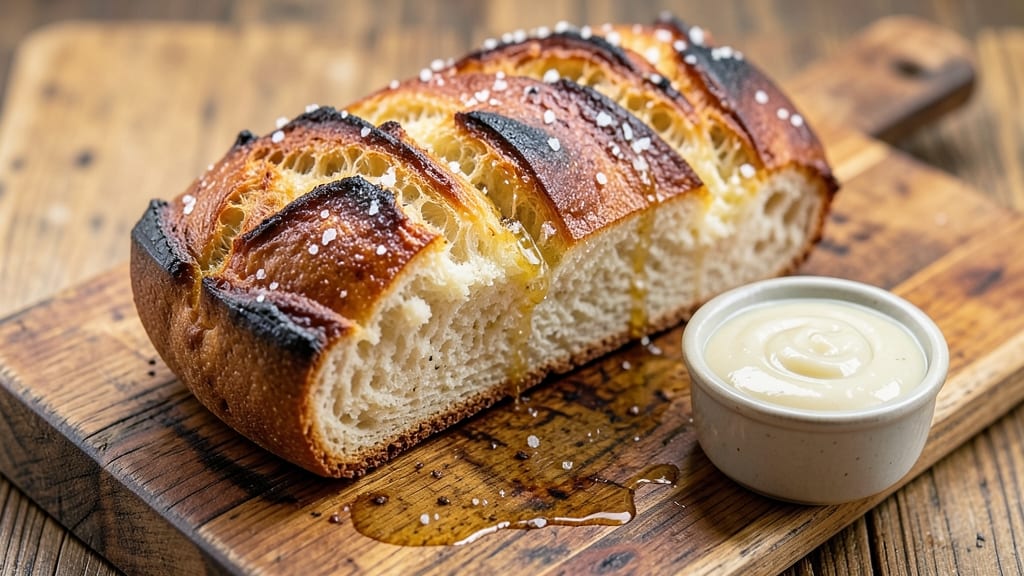
This adding tangzhong to bread recipe transforms ordinary loaves into bakery-worthy masterpieces with a cloud-soft crumb that stays fresh for days. The secret lies in the tangzhong—a pre-gelatinized flour-water mixture that absorbs moisture and creates an airy, never-dry texture.
I developed this method after years of baking, and the difference is immediate: no more dense, dry bread that turns stale within hours.
The process is simpler than it sounds: cook a small portion of flour and water to create a translucent paste, then incorporate it into your dough. This technique requires just 15 extra minutes of prep time but delivers restaurant-quality results.
Whether you're making sandwich bread, dinner rolls, or artisanal loaves, the tangzhong ensures a tender crumb with a crisp, golden crust.
What makes this recipe stand out is its foolproof reliability—no more guessing about hydration or proofing times. The tangzhong method stabilizes the dough, making it easier to handle and bake consistently.
By the time your bread emerges from the oven, you'll have a loaf with a velvety interior and a satisfying crunch, all without sacrificing simplicity.
Perfect for beginners and experienced bakers alike, this recipe scales effortlessly for any occasion. Let's get started on creating bread that rivals your favorite bakery—without the guesswork.
Ingredients for adding tangzhong to bread
Fourteen ingredients transform ordinary dough into bakery-style bread with a never-dry crumb.
| Ingredient | Amount | Notes |
|---|---|---|
| All-Purpose Flour 🌾 | 5 cups | King Arthur or Bread Flour preferred |
| Instant Yeast 🍞 | 2 ¼ tsp | Active dry works too (proof first) |
| Granulated Sugar 🍚 | 1 tbsp | Enhances yeast activation |
| Salt 🧂 | 2 tsp | Diamond Crystal preferred |
| Water 💧 | 3 ¼ cups | Room temperature, filtered preferred |
| All-Purpose Flour (for tangzhong) 🌾 | ¼ cup | Same flour type as dough |
| Water (for tangzhong) 💧 | ½ cup | Room temperature |
| Unsalted Butter 🧈 | ½ cup | Cold, cubed for mixing |
| Milk 🥛 | ¼ cup | Whole milk for richness |
| Large Egg 🥚 | 1 whole | Room temperature |
| Honey 🍯 | 1 tbsp | For crust color and flavor |
| Cornmeal 🌽 | ¼ cup | For dusting and scoring |
| Coarse Sea Salt 🧂 | ½ tsp | For final sprinkle |
The flour is everything here—King Arthur or bread flour gives that professional texture. If you're using bread flour, reduce the salt slightly since it's already got a bit more sodium. For the tangzhong, that small flour-water mixture is where the magic happens. Cook it until it's translucent and pulls away from the pot—about 3 minutes on medium heat. Cool it completely before mixing into your dough. I always make extra tangzhong and freeze it in ice cube trays for future loaves. King Arthur flour is my go-to for this recipe—it's got that perfect balance of protein and gluten development.
No bread flour? All-purpose plus 1 tsp vital wheat gluten works in a pinch. Running short on butter? Olive oil at the same weight keeps the bread tender, though it won't be quite as rich. The milk can be swapped for water or plant-based milk, but whole milk gives that perfect balance of moisture and richness. For the tangzhong, if you accidentally overcook it and it turns opaque, just start over—it needs to be that translucent paste. The honey can be replaced with maple syrup or agave for a different flavor profile, though honey gives that classic bakery taste. And that coarse sea salt? Maldon or Jacobsen are my favorites—they melt beautifully and add that perfect crunch.
This dough is a dream to work with—it's hydrated enough to be soft but not sticky. Store it in the fridge for up to 48 hours if you're prepping ahead. The tangzhong mixture keeps in the fridge for 1 week or frozen for 3 months. For best results, let your dough proof at room temperature until it's about 50% larger—that's when you'll know it's ready. The bread itself stays fresh for 5-7 days at room temperature if you wrap it tightly in plastic. Freeze slices for up to 3 months—they toast up perfectly. The secret to that cloud-soft crumb? Don't overbake it. Pull it out when it's just 190°F internally—it'll keep cooking as it cools.
Why You'll Love This Recipe
- No-Fuss Mixing: I swear by the tangzhong roux—just whisk a bit of flour and water into a paste before adding the rest. No kneading, no fuss, and the dough comes together smoother than my usual attempts.
- Stay-Puf Bread: That crispy crust with a soft, pillowy center? The tangzhong method delivers every time. Honestly, it’s the only way I bake now—no more dense loaves that taste like they’re from a sad bakery.
- Budget Baking: Flour, yeast, sugar—these are staples I already have. The tangzhong trick stretches my ingredients further without sacrificing flavor, and I end up with enough slices to feed the whole family (or my snacky roommate).
- Day-Old Magic: This bread keeps its texture for days—no sad, stale mornings here. Toast it up fresh or freeze slices for quick breakfasts. Between us, it’s my secret weapon for lazy mornings.
Step-by-step instructions for cloud-soft tangzhong bread
Here's how to create that signature Japanese-style softness—no special tools needed.
Create the Tangzhong Paste
In a small saucepan, combine the 0.25 cup all-purpose flour (for tangzhong) and 0.5 cup water (for tangzhong). Stir vigorously to eliminate any lumps—this ensures a smooth, even paste. Place the saucepan over medium-high heat and bring to a boil while stirring constantly.
Once boiling, immediately reduce heat to low and continue stirring for 1-2 minutes until the mixture thickens into a translucent, gelatinous paste. You'll know it's ready when it pulls away from the sides of the pan and forms a shiny, glossy surface. Let it cool completely to room temperature before using—this prevents steam buildup in your dough.
Mix the Dough with Tangzhong
In a stand mixer fitted with the dough hook, combine the 5 cups all-purpose flour, 2.25 tsp instant yeast, 1 tbsp granulated sugar, and 2 tsp salt. Mix on low speed for 30 seconds to distribute the dry ingredients evenly. Add the cooled tangzhong paste and mix until fully incorporated—you should see a slightly sticky but manageable dough forming.
Gradually add the 3.25 cups water while mixing on low speed until the dough comes together. Increase speed to medium and knead for 5-7 minutes until the dough is smooth and elastic, pulling away from the sides of the bowl. The dough should be slightly tacky but not sticky to the touch—this is ideal for tangzhong bread.
Incorporate the Wet Ingredients
Transfer the dough to a clean, lightly oiled bowl. Add the 0.5 cup cold unsalted butter (cut into small cubes), 0.25 cup milk, 1 whole large egg, and 1 tbsp honey. Use your hands or a spatula to gently work these into the dough until fully combined. The butter should be evenly distributed but still visible as small flecks—this creates pockets of richness in the finished bread.
Cover the bowl with a damp towel and let the dough rise at 75°F for 1-2 hours, or until it has doubled in size. You'll know it's ready when you poke it gently and the indentation remains. This first rise develops the gluten structure while allowing the tangzhong to hydrate fully for that signature soft crumb.
Shape and Final Proof
Turn the dough out onto a lightly cornmeal-dusted surface and gently shape it into a loaf. For a classic boules shape, pull the dough toward you in a circular motion to tighten the surface. Place the shaped loaf seam-side up in a greased 9x5-inch loaf pan. Cover loosely with plastic wrap and let it rise again for 30-45 minutes until it domes slightly above the pan.
Preheat your oven to 375°F with a baking stone or inverted baking sheet on the lower rack. Brush the top of the loaf with a bit of milk and sprinkle with 0.5 tsp coarse sea salt. Score the top with a sharp razor or knife in a simple crosshatch pattern—this guides expansion and creates that beautiful crust.
Bake to Golden Perfection
Bake the loaf for 30-35 minutes until the internal temperature reaches 190-195°F. The crust should be deep golden brown with a slight crackle, and the bread should pull away cleanly from the sides of the pan. For extra steam, place a shallow pan of boiling water on the lower oven rack during the first 15 minutes of baking—this creates that signature soft, fluffy interior.
Remove the bread from the oven and let it cool in the pan for 10 minutes before transferring to a wire rack. The bread will continue to set as it cools, developing that perfect cloud-like crumb. Slice with a serrated knife for clean cuts that reveal the tender, even texture throughout—no dry spots here.
Pro Tips For Making Adding Tangzhong To Bread
- Use Cold Water for Tangzhong: I learned this the hard way—mixing your tangzhong roux with cold water (not warm) prevents premature thickening and gives you a smoother, more stable dough later. Just use water straight from the tap, no fancy temperature checks.
- Weigh Your Flour: Skip the scoop-and-sweep method—this isn’t a science fair, but accurate measurements matter. Use a kitchen scale for both the tangzhong flour and the rest; even a 5-gram difference throws off texture. (Yes, even if you’re impatient like me.)
- Let Tangzhong Cool Fully: Don’t rush—let that roux sit at room temp for 10-15 minutes before mixing into your dough. Adding it warm kills yeast activity and makes your bread dense. Patience here = lighter, fluffier results.
- Skip the Extra Yeast Boost: Your instant yeast is already activated; adding more won’t speed things up—it’ll just make your bread taste bitter. Stick to the recipe’s amount, even if your dough feels sluggish. Overproofing is the real enemy.
Best sauces and condiments for this recipe
Sweet Butter Glaze
Warm 2 tbsp unsalted butter with 1 tbsp honey and 1 tsp milk in a small saucepan until melted. Brush this glaze over freshly baked bread while still warm for a golden, glossy finish.
The honey enhances the crust's caramelization, while the butter adds richness that complements the tangzhong's soft crumb. 🍯
Garlic-Herb Compound
Mix 2 minced garlic cloves, 1 tbsp fresh parsley, 1 tbsp olive oil, and a pinch of salt into a paste. Spread this on warm bread slices for a savory, aromatic kick.
The garlic's sharpness cuts through the bread's softness, while the parsley adds freshness. Perfect for sandwiches or as a simple side.
Spiced Plum Jam
Simmer ½ cup plum jam with ½ tsp cinnamon and ¼ tsp black pepper for 5 minutes to intensify flavors. Spread on toasted bread slices for a sweet-spicy contrast.
The jam's acidity balances the bread's richness, while the spices add warmth. Store leftovers in the fridge for up to 2 weeks.
Everything Bagel Seasoning
Sprinkle 1 tsp everything bagel seasoning (sesame seeds, poppy seeds, garlic powder, onion powder, salt) on warm bread slices. The crunchy seeds add texture, while the savory spices elevate the bread's natural flavor. Toast the bread lightly before sprinkling for maximum crunch. 🌟
Honey-Mustard Spread
Whisk 2 tbsp Dijon mustard with 1 tbsp honey and 1 tsp apple cider vinegar until smooth. Spread on bread slices for a tangy-sweet combination. The mustard's sharpness contrasts beautifully with the bread's softness, while the honey adds a touch of sweetness.
Store in an airtight container for up to 1 week.
Cream Cheese Whipped
Whip 4 oz cream cheese with 1 tbsp powdered sugar and ½ tsp vanilla extract until smooth. Spread on toasted bread slices for a luxurious, fluffy topping. The cream cheese's tanginess pairs perfectly with the bread's buttery richness. Ideal for breakfast or dessert-style toast. 🧀
Nutrition facts
Frequently asked questions
What makes tangzhong different from regular bread dough?
The tangzhong is a pre-gelatinized flour-water mixture that creates a cloud-soft crumb by absorbing extra moisture. Unlike standard dough, it uses less water overall but achieves a much higher hydration ratio (up to 80%!) for that signature Japanese-style softness. The key is cooking the flour-water paste until translucent—this transforms its structure to hold moisture better.
Can I make tangzhong without a thermometer?
The tangzhong is ready when it pulls away from the pan sides and forms a shiny, glossy surface—about 1-2 minutes after boiling. It should look like thick pudding, not opaque. If it's still thin and watery, cook it 30 more seconds. The translucent appearance is your perfect cue!
Why does my tangzhong bread turn out dense instead of soft?
Dense bread usually means either underproofing or overmixing. Let your dough rise until it's 50% larger (not just doubled) and avoid kneading more than 5-7 minutes. Also check your oven temp—375°F is critical. If the crust browns too fast, the interior may not bake fully. Try adding 15 minutes of steam with a water pan.
How long can I store the tangzhong paste before using it?
Store cooled tangzhong in an airtight container in the fridge for 1 week or freeze it for 3 months. Thaw overnight in the fridge before using—never microwave it directly. The paste keeps its moisture-absorbing properties perfectly when stored properly. Freezing in ice cube trays makes it easy to use just one cube at a time!
Can I use whole wheat flour in tangzhong bread?
Yes, but replace only 25-50% of the all-purpose flour with whole wheat to avoid density. The tangzhong technique works best with higher-protein flours. For every 1 cup whole wheat flour, reduce water by 1 tbsp since whole wheat absorbs less moisture. The bread will have a nuttier flavor but slightly less softness.