
Breakfast & Brunch
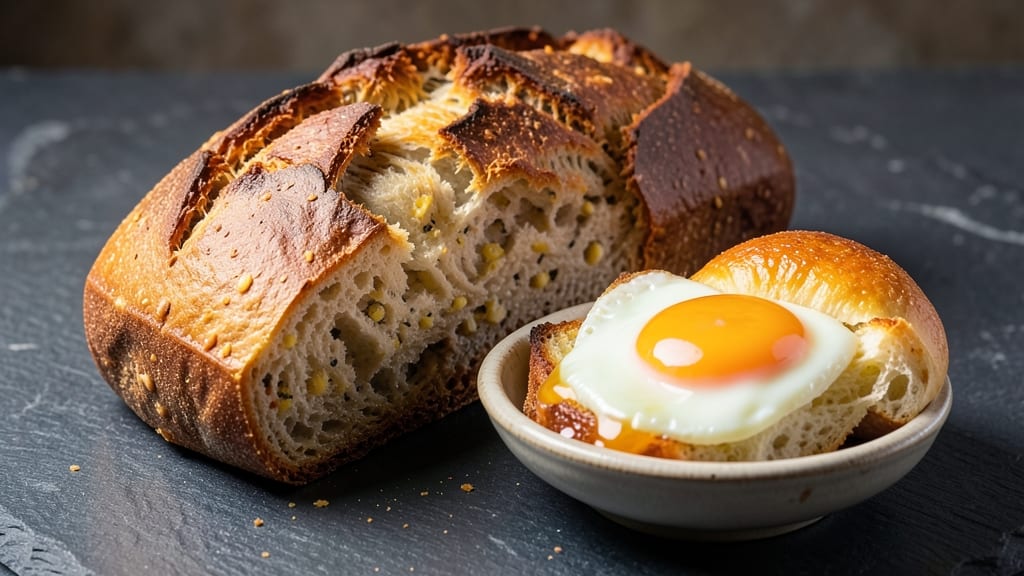
Adding egg to a bread recipe transforms ordinary loaves into something luxurious—richer, softer, and impossible to resist. 💛 This recipe reveals how to incorporate eggs without dryness, creating bread with a tender crumb and golden crust that rivals artisanal bakeries. The secret lies in precise timing and technique, ensuring eggs enhance rather than overpower the dough.
What makes this method special is the balance: eggs add moisture and structure while preventing gluten from over-developing. You’ll work with a slightly wetter dough that requires careful handling, but the result—a bread with a velvety interior and crisp edges—is worth every step.
Perfect for brioche, milk bread, or sweet loaves, this technique elevates any recipe.
The process is straightforward: combine eggs with milk or water for a liquid enrichment, then incorporate them into the dough at the right stage. Proofing and baking require attention to detail, but the payoff is bread that stays fresh longer and tastes even better the next day.
This is how professionals achieve restaurant-quality texture at home.
Once mastered, you can experiment with variations—adding butter for extra richness, sugar for sweetness, or even citrus zest for brightness. The possibilities are endless, but the foundation remains the same: eggs as the key to unlocking perfect bread. Let’s get started.
Ingredients for adding egg to bread
Precision ingredients for restaurant-quality bread enriched with eggs and milk.
| Ingredient | Amount | Notes |
|---|---|---|
| Large Eggs 🥚 | 4 whole | Room temperature for even distribution |
| Whole Milk 🥛 | ½ cup | Cold, full-fat preferred |
| All-Purpose Flour 🌾 | 4 cups | Bread flour for higher protein |
| Granulated Sugar 🍚 | ¼ cup | Adjust for sweet variations |
| Unsalted Butter 🧈 | ½ cup | Softened, European-style preferred |
| Active Dry Yeast 🍞 | 2 ¼ tsp | Fresh yeast at half quantity |
| Diamond Crystal Kosher Salt 🧂 | 1 ½ tsp | Adjust to taste |
| Granulated Sugar (for dough) 🍚 | ¼ tsp | Optional for enriched flavor |
| Large Egg Yolks (optional) 🥚 | 2 whole | For extra richness |
| Fresh Lemon Zest (optional) 🍋 | 1 tsp | Brightens flavor profile |
| Cornmeal (for dusting) 🌽 | ¼ cup | Prevents sticking |
| Water (for proofing) 💧 | ¼ cup | Lukewarm recommended |
The eggs are the game-changer here—room temperature is non-negotiable for even distribution in the dough. For optimal quality, organic pasture-raised eggs from Trader Joe's or Whole Foods provide richer flavor, but any large eggs work. The milk should be cold to prevent premature yeast activation; whole milk yields the tenderest crumb, but 2% or skim can substitute if preferred. Flour selection matters: King Arthur bread flour delivers higher protein for better gluten development, though all-purpose flour suffices for home baking. Store flour in a cool, dark place to preserve freshness—exposure to light and heat degrades gluten quality over time.
No whole milk? Evaporated milk or heavy cream work in a pinch, though texture may vary slightly. Substituting eggs? Flax eggs (1 tbsp ground flaxseed + 3 tbsp water per egg) mimic moisture but lack structure—best for quick breads, not enriched doughs. For the yeast, fresh yeast requires half the quantity of active dry; test vitality by dissolving in warm water with a pinch of sugar—it should foam within 5-10 minutes. The butter should be European-style (like Plugrá) for higher fat content and better flavor, but regular unsalted butter works fine. Lemon zest adds brightness but can be omitted for neutral flavor profiles—just reduce sugar slightly if skipping.
Store flour and yeast in airtight containers in the pantry for up to 6 months; eggs last 3 weeks in the fridge. Pre-mix the dry ingredients (flour, sugar, salt, yeast) in one bowl and wet ingredients (eggs, milk, butter) in another to streamline dough preparation. Dough can be refrigerated for up to 24 hours before shaping—this enhances gluten relaxation for a softer texture. For longer storage, freeze shaped dough on a tray before transferring to a bag for up to 3 months. Proofing water should be lukewarm (105-110°F)—too hot kills yeast, too cold slows fermentation.
Why You'll Love This Recipe
- Pantry Staple Magic: I swear by this one because it uses exactly what I already have—no special trips to the store. The eggs add richness without fuss, the milk keeps it tender, and that butter? It’s the secret to a golden crust every single time.
- Buttery Sweet Payoff: The sugar caramelizes just enough to give it a subtle sweetness, while the eggs bind everything into a soft, almost cake-like texture. Honestly, it’s the kind of bread that disappears faster than I can say “second slice.”
- Breakfast to Brunch: Make a batch in the morning, and you’ve got toast for breakfast, French toast for brunch, or even sandwiches for lunch. I’ll be real—my kids beg for the leftovers, and I’ve never had to explain why.
- Budget-Friendly Luxury: Flour, eggs, milk, and butter? Check. It costs pennies per serving but tastes like a bakery treat. Plus, the dough keeps well for days, so I’m always covered without breaking the bank.
Step-by-step instructions for enriched bread with eggs
Mastering egg incorporation transforms basic bread into tender, moist loaves with professional texture.
👨🍳 Step 1: Prepare the Enriched Dough Base
In a stand mixer fitted with the dough hook, combine the 4 cups all-purpose flour, 2.25 tsp active dry yeast, 1.5 tsp Diamond Crystal kosher salt, and 0.25 tsp granulated sugar (for dough). Mix on low speed for 30 seconds to aerate the flour and activate the yeast.
Add the 0.5 cup softened unsalted butter and mix until fully incorporated, about 2 minutes. The butter should be evenly distributed but still visible as small flecks. This creates the foundation for your enriched dough, where the fat will later interact with the eggs to create that signature tender crumb.
🍳 Step 2: Incorporate Wet Ingredients and Eggs
In a separate bowl, whisk together the 4 whole large eggs (at room temperature), 0.5 cup whole milk, and 0.25 cup granulated sugar. Add this mixture to the mixer along with the 2 whole large egg yolks (optional) and 1 tsp fresh lemon zest (optional) if using. Mix on medium speed for 3-4 minutes until the dough comes together and pulls away from the sides of the bowl.
Here's where it gets technical: the eggs should be fully emulsified with the butter and milk, creating a smooth, elastic dough. If the dough feels too sticky, add 1 tablespoon flour at a time until it reaches a soft but manageable consistency. The eggs will add richness, but proper hydration remains critical for proper gluten development.
🥘 Step 3: Knead for Optimal Gluten Structure
Continue kneading the dough on medium-low speed for an additional 5-7 minutes until it becomes smooth and elastic. The dough should pass the windowpane test—when you stretch a small piece, it should thin enough to see light through without tearing. This kneading step is crucial as it develops the gluten network that will later trap the moisture from the eggs.
If the dough feels too warm after kneading, chill it for 15 minutes before proceeding. The eggs will add moisture that can overproof the dough if not controlled. The ideal dough temperature should be between 75-80°F—use a kitchen thermometer if needed. This temperature range ensures proper yeast activity without overworking the gluten.
𰰟 Step 5: Shape and Proof for Final Rise
Punch down the risen dough and shape it into your desired loaf form. For a classic round loaf, create a smooth surface and place it on a parchment-lined baking sheet dusted with 0.25 cup cornmeal (for dusting). Cover again and let proof for an additional 30-45 minutes until just puffy. The cornmeal creates a crisp barrier that prevents sticking during baking.
Preheat your oven to 375°F with a baking stone or inverted baking sheet on the lower rack. The eggs will contribute to a slightly denser crumb, so avoid overbaking. Bake for 25-30 minutes until the internal temperature reaches 190-195°F and the crust is golden brown. The enriched dough will bake slightly faster than standard bread due to its higher moisture content.
Pro Tips For Making Adding Egg To Bread
- Whisk Eggs Cold: Pull the eggs straight from the fridge—room temperature eggs make the batter too runny, and you’ll end up with a dense, gummy mess instead of that light, tender texture. I learned this the hard way after making a batch that turned out like a brick. Trust me, the extra 10 minutes waiting pays off.
- Mix Butter Last: Cut the cold butter into the flour-sugar mix after you’ve combined the wet ingredients—this keeps the butter from melting into the batter too soon. I used to add it all at once and wondered why my final texture was always greasy instead of flaky. Work it in until it resembles coarse crumbs, then fold in the wet mix.
- Skip Overmixing Wet Ingredients: Once you add the milk and egg, stir just until combined—overmixing develops gluten and turns your bread into a chewy, dense loaf. I was aggressive with my whisk for years until I noticed the difference when I stopped. Two or three gentle folds is all you need.
- Use Room-Temp Milk: Cold milk makes the butter clump and the batter separate, while warm milk (not hot) blends smoothly for a uniform crumb. I was skeptical until I tried it—now I always microwave the milk for 20 seconds to take the chill off. No one wants a bread with pockets of butter or flour dust.
Serving suggestions for this dish
Breakfast Pairings
This egg-enriched bread is a breakfast game-changer when paired with scrambled eggs and crispy bacon. The tender crumb soaks up runny yolks beautifully, while the smoky bacon adds a perfect salty contrast.
I like toasting slices and topping them with avocado mash and a sprinkle of flaky sea salt for a brunch-worthy plate. 🥓
Sweet Toppings
Transform your loaf into a dessert by spreading Nutella or peanut butter on warm slices, then topping with banana slices and a drizzle of honey. The eggs in the dough create a rich, almost brioche-like texture that holds up to sweet fillings.
For extra decadence, add chopped walnuts or dark chocolate chips before baking.
Sandwich Potential
Use this bread for gourmet grilled cheese—the egg enrichment prevents dryness when melted. I love pairing it with sharp cheddar, gruyère, and tomato jam for a sweet-savory combo.
For lunches, try turkey, Swiss cheese, and honey mustard on toasted slices. The bread's moisture content keeps sandwiches fresh longer than standard bread.
Dessert Applications
Create French toast with this bread—its egg-rich composition makes it extra tender. Dip slices in a mixture of 2 eggs, ½ cup milk, 1 tsp vanilla, and 1 tbsp cinnamon, then pan-fry in butter until golden.
Serve with maple syrup and whipped cream for a restaurant-quality breakfast. The eggs in the dough amplify the custard-like texture.
Beverage Pairings
Pair this bread with coffee to balance its richness—dark roasts like Sumatra or French press cut through the butter and eggs. For tea lovers, Earl Grey enhances the bread's subtle sweetness.
A sparkling apple cider adds brightness when serving as a dessert bread. The eggs' richness makes it versatile enough for both savory and sweet pairings.
Storage Hacks
Store leftovers in an airtight container at room temperature for 2-3 days or freeze for up to 3 months. Reheat slices in a toaster or oven at 350°F for 5-7 minutes to restore freshness.
The eggs in the dough help preserve moisture, so slices stay soft longer than standard bread. For extra crispiness, toast before storing in the freezer.
Nutrition facts
Frequently asked questions
Why does adding egg make bread softer?
Eggs add moisture and fat to bread dough, creating a tender crumb. The proteins in eggs coat gluten strands, preventing them from forming tight networks. This results in bread that stays soft longer and has a finer texture. The moisture from eggs also helps retain freshness for days after baking.
Can I substitute eggs in this enriched bread?
For texture, use 2 tablespoons ground flaxseed + 6 tablespoons water per egg (flax egg). For moisture only, try 2 tablespoons melted butter + 1 tablespoon milk. However, eggs provide structure and richness that substitutes can't fully replicate. The bread will be less tender but still edible.
How do I know when the dough is ready for proofing?
Perform the "windowpane test": stretch a small piece of dough between your fingers. If it thins to translucent without tearing, it's ready. For egg-enriched dough, it should feel slightly tacky but not sticky. The dough should also double in size during first proofing (1-2 hours). If it rises too quickly, your kitchen may be too warm.
Will this bread be dense if I use too many eggs?
Yes, exceeding 4 eggs for 4 cups flour can make bread gummy or dense. Eggs add moisture that yeast struggles to ferment properly. For every extra egg, reduce milk by 1 tablespoon to maintain balance. The ideal ratio is 1 egg per 1 cup flour in enriched doughs.
Can I make this bread without a stand mixer?
Mix dry ingredients first, then combine wet ingredients by hand. Knead on a lightly floured surface for 8-10 minutes until smooth and elastic. The dough will be stickier without a mixer, so use extra flour sparingly. For best results, work in a cool kitchen (70°F or below) to prevent overworking.