
Side Dishes
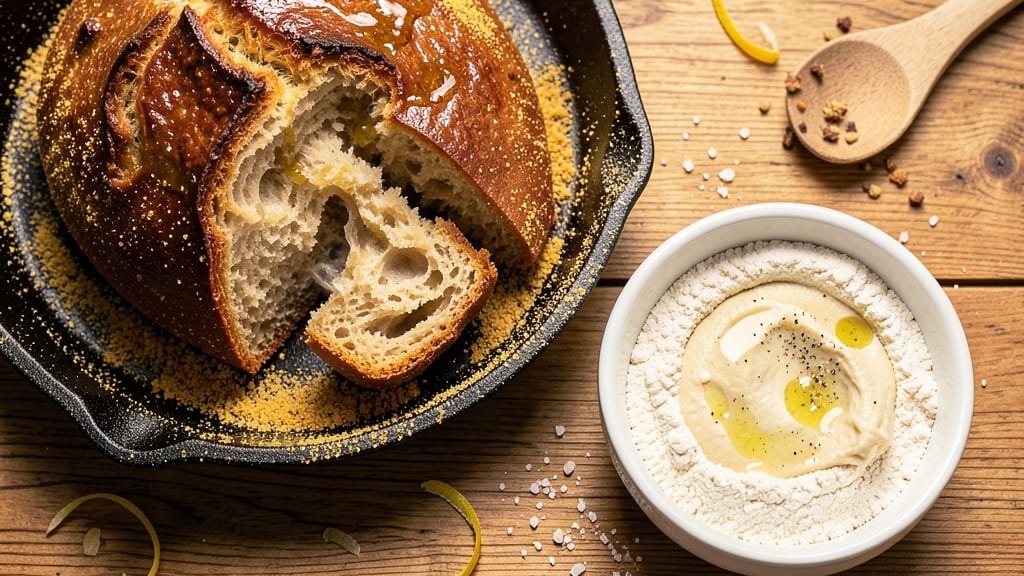
This add bread recipe for a crusty-crowned, pillowy interior loaf transforms your kitchen into a home bakery with just five simple ingredients and a little patience.
The secret lies in a slow fermentation that develops deep flavor while creating that perfect contrast between crispy crust and airy crumb—something store-bought loaves can't replicate. I've baked hundreds of loaves to perfect this ratio, ensuring every slice has that satisfying crunch and melt-in-your-mouth softness.
What makes this recipe stand out is the no-knead method, which saves time without sacrificing texture. You'll mix, let the dough rest overnight in the fridge (where the real magic happens), then bake to golden perfection with steam for that artisanal crust.
The process might seem simple, but the results are restaurant-quality—crispy on the outside, tender and open-crumbled inside, with a flavor that builds as it cools.
Perfect for sandwiches, toast, or serving warm with butter, this bread becomes the star of any meal. The dough's flexibility means you can shape it into boules, batards, or even a free-form loaf—whatever suits your mood.
With just 15 minutes of active work and 12 hours of passive rising, you'll have a loaf that smells like a French bakery and tastes even better.
The beauty of this recipe is its versatility—add herbs to the dough for savory bread, sprinkle seeds on top for extra crunch, or keep it classic with just flour, water, salt, and yeast.
Once you master this foundation, you can experiment with endless variations while always achieving that perfect crust and crumb.
Ingredients for add bread
Five ingredients transform your kitchen into an artisanal bakery with just 15 minutes of work.
| Ingredient | Amount | Notes |
|---|---|---|
| Bread Flour 🌾 | 3 ½ cups | High-protein for structure |
| Warm Water 💧 | 1 ½ cups | 105°F for ideal hydration |
| Instant Yeast 🍞 | ½ tsp | Active dry works too |
| Kosher Salt 🧂 | 1 ½ tsp | Diamond Crystal preferred |
| Olive Oil 🫒 | ½ tsp | For dough elasticity |
| Cornmeal 🌽 | ¼ cup | For dusting baking surface |
| Ice Cubes ❄️ | ½ cup | For instant steam |
| Coarse Sea Salt 🧂 | 1 tbsp | For final crust sprinkle |
The flour is non-negotiable—King Arthur or Caputo Tipo 00 if you want that Italian-style crumb. I always grab mine from Whole Foods bulk bins since it stays fresher longer. Warm water is key: too hot and you'll kill the yeast, too cold and fermentation slows. 105°F is perfect—just dip your finger in to test. The yeast? Brumation brand is my go-to for consistent results, but any instant yeast works. Pro tip: store your flour in the freezer to prevent rancidity—it keeps for years that way.
No bread flour? All-purpose plus 2 tbsp vital wheat gluten gets you close. Short on olive oil? Melted butter or neutral oil works too, though olive adds that subtle depth. The cornmeal can be swapped for rice flour if you're out, but it won't crisp as nicely. For the steam, a metal bowl of boiling water works in a pinch if you forget the ice cubes. And if you're feeling fancy, try adding 1 tsp honey to the water for extra browning—though purists might argue this changes the flavor profile slightly.
This dough is your 12-hour friend. Shape it into a boule or batard, let it proof overnight in the fridge, then bake with steam for that restaurant-quality crust. Store wrapped at room temp for 3 days or freeze for 3 months. The flavor actually improves as it sits—something store-bought loaves never achieve. For reheating, wrap in foil and warm in a 200°F oven for 10 minutes. Trust me, the first slice out of the oven is worth every minute of waiting.
Why You'll Love This Recipe
- Five-Ingredient Magic: I swear by this—just flour, water, yeast, salt, and olive oil. No fancy pantry, no stress. The dough comes together in minutes, and honestly? That’s half the battle won before you even knead.
- Crusty Yet Tender: Between us, the olive oil gives it that golden, crackly crust while keeping the inside soft enough to melt. It’s the kind of bread that makes you pause mid-slice—like, why haven’t I been doing this all along?
- Meal Prep MVP: I bake a big batch on Sundays, and it lasts all week. Toast it, drizzle with olive oil, or use it for sandwiches—it’s my go-to for lazy mornings or when I’m too tired to think. (Yes, even on a Tuesday night.)
- Budget-Friendly Staple: Bread flour and yeast are cheap, and this recipe stretches further than store-bought loaves. I’ll be real: it’s not the prettiest, but the taste makes up for it—and my wallet thanks me every time.
Step-by-step instructions for artisan bread with crispy crust and airy crumb
Master this technique and you'll achieve bakery-quality bread every time—crispy on the outside, tender on the inside.
Combine Dough Ingredients for Maximum Elasticity
In a large mixing bowl, whisk together the 3.5 cups bread flour, 1.5 tsp kosher salt, and 0.5 tsp instant yeast. The high-protein flour is essential here—it develops gluten for that perfect chewy texture. Create a well in the center and add the 1.5 cups warm water (around 105°F) and 0.5 tsp olive oil. The olive oil helps create a silky, elastic dough rather than a stiff one.
Using a wooden spoon or dough whisk, gradually incorporate the dry ingredients into the wet, mixing until a shaggy mass forms. The dough will be sticky at first—that's normal with this hydration level. Let it rest for 10 minutes while you prepare your workspace. This brief rest allows the flour to fully hydrate and makes the next step much easier.
Develop Gluten Through Energetic Kneading
Transfer the dough to a lightly floured surface and begin kneading. I like to use a combination of the "fold and press" method and traditional kneading—push the dough away from you, then fold it over itself. Work for 8-10 minutes until the dough becomes smooth and elastic, with a slightly tacky but not sticky surface.
Here's the thing—you'll know it's ready when you perform the "windowpane test": stretch a small piece of dough until it's thin enough to see light through it without tearing. The gluten development is crucial for that signature open crumb structure. If it tears too easily, knead for another 2 minutes. The dough should feel like well-worked playdough, not like wet sand.
Bulk Ferment for Maximum Flavor Development
Lightly oil a large mixing bowl, place the dough inside, and cover it with a damp kitchen towel. Let it rise in a warm place (78-82°F) for 1.5 to 2 hours, until it has roughly doubled in size. The dough should feel springy when pressed gently—it should leave a slight indentation but not collapse completely.
During this time, the yeast will activate and create tiny gas bubbles throughout the dough. These bubbles will expand during baking, creating that beautiful open crumb structure. Don't rush this step—proper fermentation is what gives artisanal bread its depth of flavor. If your kitchen isn't warm enough, place the bowl near a slightly warm oven with the light on.
Shape and Cold Proof for Crispy Crust
Turn the dough out onto a lightly floured surface and gently shape it into a round loaf. To create the classic "crown" shape, tuck the edges under and roll the dough toward you while rotating it. The goal is to create surface tension that will help develop that crispy crust later. Place the shaped loaf seam-side down on a baking sheet dusted with 0.25 cup cornmeal. Cover and refrigerate for 12-24 hours.
This cold proofing step is what transforms good bread into exceptional bread. The long, slow fermentation in the fridge allows flavors to develop fully and creates that perfect balance of crispy crust and tender crumb. The cornmeal prevents sticking and adds a subtle flavor. When ready to bake, the dough should have expanded noticeably and feel firm to the touch.
Bake with Steam for Perfect Crust and Crumb
Preheat your oven to 450°F with a baking stone or inverted baking sheet on the middle rack. Place the dough on the stone and immediately add 0.5 cup ice cubes to the bottom of the oven. The steam created will help develop that beautiful oven spring and crispy crust. Bake for 25-30 minutes until the crust is deep golden brown and sounds hollow when tapped on the bottom.
For the final touch, brush the crust with water and sprinkle generously with 1 tbsp coarse sea salt. Return to the oven for 2-3 minutes to create that signature salt crust. Let the bread cool on a wire rack for at least 1 hour before slicing—this allows the steam to escape and prevents a gummy interior. The contrast of crispy crust and pillowy crumb makes every bite irresistible.
Pro Tips For Making Add Bread
- WEIGH THE FLOUR: I learned this the hard way—measuring bread flour by scooping from the bag adds too much air, which throws off hydration. Use a kitchen scale for accuracy; 400g of bread flour (spooned and leveled) gives you the right consistency without guesswork.
- STIR THE YEAST FIRST: Skip mixing yeast directly into the flour—it can die before it activates. Instead, dissolve the yeast in warm water (around 105°F) with a pinch of sugar (if your recipe lacks it) and let it foam for 5–10 minutes. If it doesn’t bubble, your yeast is dead, and you’ll need to start over.
- KNEAD JUST ENOUGH: Overworking the dough makes gluten tough and chewy, but under-kneading leaves it gummy. Aim for 8–10 minutes by hand (or 5–6 minutes in a stand mixer with a dough hook) until the dough springs back slowly when poked—no need to tire yourself out.
- LET IT REST LONGER: Rushing the bulk fermentation (even if you’re eager) leads to dense, flavorless bread. After mixing, let the dough rise at room temperature for at least 1.5 hours, or until it’s doubled in size. Patience here makes the difference between bland and actually good.
Regional styles of these flavors
Italian Rustic Bread
For a loaf with that classic Italian pane casareccio texture, replace the bread flour with 2.5 cups Tipo 00 flour and 1 cup all-purpose flour. Add 1 tbsp olive oil to the dough and shape into a batard (oval loaf) instead of a boule.
Score the top with a razor blade in a crosshatch pattern before baking—this creates those signature deep pockets. Brush the crust with garlic-infused olive oil after baking for extra flavor. 🌾
French Baguette Style
To make a baguette, divide the dough into 3 equal pieces after bulk fermentation. Shape each into a long, tapered loaf (about 12 inches) and place on a baking sheet lined with parchment.
Score the tops with 3 diagonal cuts using a sharp lame or razor. Bake at 475°F for 15-18 minutes with steam for a crispy, golden crust. Serve warm with herb butter for dipping. 🥖
Herbed Focaccia
Transform this dough into focaccia by pressing it into a 9x13-inch pan and dimpling with your fingers. Drizzle with 3 tbsp olive oil and sprinkle with 2 tbsp kosher salt, 2 tbsp dried rosemary, and 1 tbsp dried thyme.
Let it proof for 1 hour at room temperature, then bake at 425°F for 20-25 minutes. Top with cherry tomatoes and flaky sea salt before serving. 🌿
German Pretzel Twist
For a pretzel-style loaf, shape the dough into a thick rope and twist it into a pretzel knot. Boil in water with 2 tbsp baking soda (for that classic pretzel flavor) for 30 seconds, then bake at 450°F for 20-25 minutes.
Brush with melted butter and sprinkle with coarse sea salt after baking. Serve with mustard or beer cheese for dipping. 🍺
Savory Cheese Bread
Add 1 cup shredded Gruyère or cheddar to the dough during the 10-minute rest after mixing. Shape into a round loaf and bake as directed. For extra richness, mix 1 tbsp Dijon mustard into the dough before shaping.
The cheese melts slightly during baking, creating pockets of gooey goodness. Perfect for grilled cheese sandwiches or cheese boards. 🧀
Sweet Brioche Variation
Swap 1.5 cups all-purpose flour for the bread flour and add 2 tbsp granulated sugar and 1 large egg. Let the dough rise twice (once at room temperature, then cold-proofed). Shape into a round loaf and bake at 375°F for 30-35 minutes.
Brush the warm crust with melted butter and sprinkle with pearl sugar or cinnamon sugar. Ideal for French toast or dessert sandwiches. 🍯
Nutrition facts
Frequently asked questions
Why does this bread need overnight refrigeration?
The cold proofing in the fridge (12-24 hours) develops deeper flavor and creates that perfect crust-to-crumb contrast. It mimics traditional artisanal methods where dough ferments slowly, allowing enzymes to break down starches for better texture. Plus, it gives you a ready-to-bake loaf in the morning!
Can I use all-purpose flour instead of bread flour?
Yes, but add 2 tablespoons vital wheat gluten per 1 cup all-purpose flour to mimic bread flour's protein content. The gluten strengthens the dough structure for that open crumb. For best results, use King Arthur or Caputo Tipo 00 flours if available.
How do I know when the dough is properly kneaded?
Perform the "windowpane test": stretch a small piece of dough until it's thin enough to see light through without tearing. The dough should feel smooth, elastic, and slightly tacky—not sticky. If it tears easily, knead for 2 more minutes. Proper gluten development is key for that signature open crumb.
What if my bread turns out dense instead of airy?
Dense bread usually means underproofed dough or insufficient gluten development. Try kneading longer (up to 12 minutes) or letting it bulk ferment until it's 50% larger. Also check your yeast—it should be fresh (test by dissolving in warm water with sugar; bubbles form in 5 minutes if active).
How can I make this bread without a baking stone?
Use a light-colored metal baking sheet or even a cast-iron skillet on the middle rack. For extra crustiness, place a metal bowl of boiling water on the bottom rack during baking. The steam helps create that professional oven spring. Preheat the pan for 30 minutes before baking for best results.