
Side Dishes
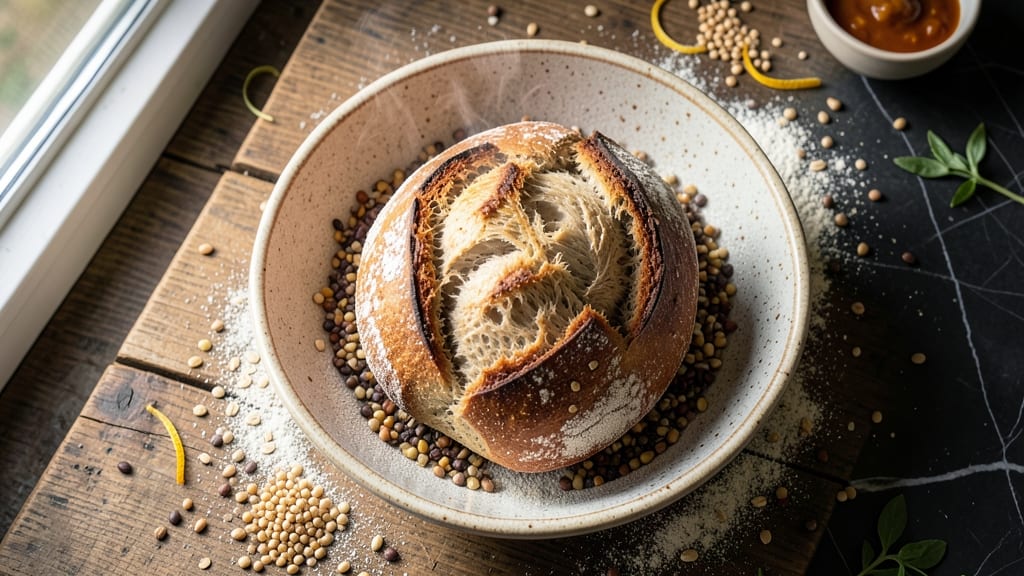
This 9-grain sourdough bread recipe transforms simple flour into a nutty, complex loaf with deep fermented flavor—perfect for artisanal bakers. The blend of whole grains (like rye, barley, and spelt) creates a hearty texture and robust taste that rivals store-bought artisan bread.
I developed this recipe after years of experimenting with grain combinations, and the result is a loaf with crispy crust, open crumb, and a subtle sweetness from the fermented grains.
What sets this recipe apart is the two-stage fermentation—first with a sourdough starter to develop tangy depth, then bulk fermentation to enhance flavor and texture.
The grains absorb moisture differently than white flour, so we’ll adjust hydration and kneading time to ensure a smooth dough that still delivers that signature rustic chew. No stand mixer? No problem—this dough is manageable by hand with patience and the right technique.
By the time it emerges from the oven, you’ll have a loaf with a golden, crackly crust and a crumb studded with chewy, nutty flecks from the grains. The flavor develops over time, making it even better the next day—ideal for toast, sandwiches, or serving warm with butter.
This recipe is designed for foolproof results, even if you’re new to sourdough, with clear troubleshooting tips for common pitfalls like dense crumb or pale crust.
The beauty of this bread lies in its versatility—use it for breakfast toast, hearty sandwiches, or even as a base for French toast. Once you master this 9-grain sourdough, you’ll never buy store-bought again. Let’s get started on creating your own artisanal loaf.
Ingredients for 9 grain sourdough bread
Nine whole grains, two-stage fermentation, and a touch of artisanal magic—here's what you'll need.
| Ingredient | Amount | Notes |
|---|---|---|
| Unbleached All-Purpose Flour 🌾 | 1 ½ cups | Standard white flour for structure |
| Whole Grain Rye Flour 🌾 | 1 cup | For deep, malty flavor |
| Pearled Barley Flour 🌾 | ½ cup | Adds chewy texture and nuttiness |
| Spelt Flour 🌾 | ½ cup | Light, slightly sweet grain |
| Whole Wheat Flour 🌾 | ½ cup | Boosts fiber and heartiness |
| Oat Flour 🌾 | ¼ cup | Creamy texture and mild sweetness |
| Buckwheat Flour 🌾 | ¼ cup | Rich, earthy depth (not gluten-free) |
| Cornmeal 🌽 | ¼ cup | Fine grind for even distribution |
| Active Dry Yeast 🍞 | ½ tsp | Freshly packaged for viability |
| Sourdough Starter 🍞 | 1 cup | 100% hydration, active culture |
| Granulated Sugar 🍚 | 1 tbsp | Feeds yeast for fermentation |
| Diamond Crystal Kosher Salt 🧂 | 2 tsp | Fine grain for even dissolution |
| Extra-Virgin Olive Oil 🫒 | ½ cup | High-quality for crust development |
| Water 💧 | 2 ½ cups | Room temperature, filtered preferred |
| Honey 🍯 | 1 tbsp | Optional for crust browning |
The grains are where the magic happens. Bob's Red Mill sells pre-ground flours, but grinding your own at home (if you have a grain mill) intensifies the flavor. Look for organic grains if possible—they have more robust flavor profiles. Rye and buckwheat are non-negotiable for that deep, earthy complexity, while spelt adds a subtle sweetness that balances the bitterness. If you're short on time, King Arthur Flour carries pre-mixed whole grain blends that work beautifully. Just remember: these flours absorb moisture differently than white flour, so don't be tempted to add extra water until you've mixed everything together.
No sourdough starter? King Arthur's sourdough mix is a lifesaver, but for authenticity, feed your starter for at least 5 days before using. Short on buckwheat? Substitute with extra rye or whole wheat—just reduce by 10% to avoid heaviness. The olive oil matters here: California avocado oil works too, but olive oil's fruity notes complement the grains perfectly. Honey is optional, but if you skip it, brush the crust with water before baking for that signature golden color. And for the love of bread, measure your flours by weight if possible—cups vary wildly with different grains.
Once mixed, the dough needs 24 hours in the fridge for optimal flavor development. Store it in an airtight container with a damp towel over top to prevent drying. The grains keep best in the freezer for up to 6 months—grind fresh before use for peak flavor. This loaf reheats beautifully: wrap in foil and warm in a 200°F oven for 10 minutes. Leftovers? Toast them—grains taste even better when crisped. And if you make a double batch, freeze half for lazy mornings.
Why You'll Love This Recipe
- No-Fuss Mixing: Between us, this dough comes together in one bowl—no fancy kneading, no stress. Just toss in the rye, spelt, and barley flours with your starter and water, fold a few times, and let the magic happen. I’ve made it while scrolling through emails; it’s that simple.
- Earthy Crunch Perfection: That nutty bite from the pearled barley and deep, chewy texture from the rye? It’s ridiculously satisfying. Honestly, I’ll take this over store-bought any day—it’s got layers of flavor you won’t find in basic loaves.
- Weeknight Wonder: Slice it for toast in the morning, pack it for lunch, or use it to soak up soup broths all week. The spelt keeps it sturdy enough for sandwiches, while the whole wheat adds just enough heartiness to feel substantial. My go-to for lazy dinners? Grilled cheese with this bread—always a win.
- Budget-Friendly Staple: You’re using pantry staples here, not specialty grains. The rye and barley bulk it up, so one loaf stretches across breakfasts, lunches, and even croutons for salads. I’ve baked this for under $3 per loaf—no joke. Plus, it freezes like a dream.
Step-by-step instructions for 9-Grain sourdough bread
Here's how to craft a complex, flavorful loaf that balances texture and depth perfectly.
Mix the Dough for Optimal Hydration
In a large mixing bowl, combine the 1 cup Whole Grain Rye Flour, 0.5 cup Pearled Barley Flour, 0.5 cup Spelt Flour, 0.5 cup Whole Wheat Flour, 0.25 cup Oat Flour, 0.25 cup Buckwheat Flour, 0.25 cup Cornmeal, and 1.5 cups Unbleached All-Purpose Flour. This blend creates a rich, nutty flavor profile while maintaining structure.
Make a well in the center and add the 1 cup Sourdough Starter, 0.5 tsp Active Dry Yeast, 1 tbsp Granulated Sugar, 2 tsp Diamond Crystal Kosher Salt, 0.5 cup Extra-Virgin Olive Oil, and 2.5 cups Water. The sugar feeds the yeast while the oil enhances crust development. Mix until just combined—overmixing develops gluten too early, which can make the bread dense.
Cover the bowl with a damp kitchen towel and let it rest at room temperature for 30 minutes. This initial rest allows the flours to hydrate and the gluten to begin developing naturally. You'll notice the dough becomes slightly sticky but more cohesive—this is the perfect consistency for the next steps.
Develop Gluten Through Autolyse and Stretch-and-Folds
After the 30-minute rest, perform a series of stretch-and-folds every 30 minutes for a total of 2 hours. Wet your hands slightly to prevent sticking, then grab one side of the dough, stretch it upward, and fold it over itself. Rotate the bowl and repeat this motion all around the dough. This technique strengthens the gluten network without overworking it.
During this time, the dough should become smoother and more elastic. It should still feel slightly sticky but hold together when pinched. If it feels too slack, let it rest for an additional 15 minutes before continuing. The goal is to create a dough with enough structure to support the fermentation while maintaining an open crumb.
Bulk Ferment for Maximum Flavor and Rise
After the final stretch-and-fold, cover the dough again and let it bulk ferment at room temperature for 4-6 hours, or until it has nearly doubled in size. The fermentation time can vary depending on your kitchen's temperature—warmer environments speed up fermentation, while cooler ones slow it down. Look for the dough to rise to about 75% of its final volume and feel slightly jiggly when gently pressed.
During fermentation, the sourdough starter activates, breaking down starches into sugars and creating a tangy depth of flavor. The multiple grain flours contribute their unique textures and tastes—rye adds malty richness, buckwheat brings earthiness, and spelt offers a subtle sweetness. This is where the magic happens, so don’t rush it.
Shape and Proof the Dough
Once the dough has risen sufficiently, turn it onto a lightly floured surface and shape it into a batard (oval loaf). To do this, grab one short end of the dough, stretch it toward you, and fold it over itself. Rotate the dough and repeat, creating surface tension that helps the loaf hold its shape. The goal is to create a taut, smooth surface with minimal seams.
Place the shaped dough seam-side up in a floured banneton (proofing basket) or a bowl lined with a floured kitchen towel. Cover it loosely and let it proof at room temperature for 1-2 hours, or until it has risen to about 50% more than its original size. The dough should spring back slowly when pressed—this indicates it’s ready for the oven.
Score and Bake for a Crispy Crust and Open Crumb
Preheat your oven to 450°F with a Dutch oven inside for 45 minutes. This ensures the oven reaches the correct temperature and the pot is hot enough for baking. While the oven heats, transfer the dough to a piece of parchment paper. Using a sharp razor blade or lame, score the dough in a ½-inch deep diagonal pattern—this allows the bread to expand and creates a beautiful, rustic crust.
Carefully lift the dough (with the parchment) into the hot Dutch oven, cover it, and bake for 30 minutes. After 30 minutes, remove the lid and brush the top of the bread with 1 tbsp Honey for a glossy, caramelized crust. Bake for an additional 15-20 minutes until the bread is deep golden brown and sounds hollow when tapped on the bottom.
Remove the bread from the oven and transfer it to a wire rack to cool completely. Resist the urge to slice it immediately—the internal temperature should drop to room temperature for the best texture. This loaf is best enjoyed the next day when the flavors have fully developed, but fresh from the oven, it’s pure magic.
Pro Tips For Making 9 Grain Sourdough Bread
- WEIGH YOUR FLOURS: The rye and barley flours pack differently than all-purpose—use a kitchen scale for accuracy. I learned this after my first loaf turned dense; those extra grams of rye make a real difference when you’re mixing nine grains.
- HYDRATE THE RYE FIRST: Mix the whole grain rye flour with water into a thick paste before adding to the dough. This prevents clumping and ensures even distribution—my dough used to look like concrete until I tried this.
- STOP FOLDING TOO SOON: Let the dough rest 30 minutes after initial mixing before doing any folds. Rushing it makes the gluten structure fight you; patience here means a lighter, more open crumb later.
- USE A DOCKING TOOL: Pierce the shaped loaf with a fork or lame before baking—especially with all those dense flours. I skipped this once and ended up with a sad, puffy mess instead of a proper crust. Two quick passes fix that.
Best sauces and condiments for these flavors
Classic Butter Spread
Nothing beats the simplicity of unsalted European-style butter like Plugrá or Kerrygold spread on warm 9-grain sourdough. The rich, creamy texture contrasts perfectly with the bread's crusty exterior and nutty crumb.
For extra depth, mix in 1 tsp honey and a pinch of flaky sea salt—this combo enhances the bread's natural sweetness while balancing its earthy grain flavors. 🌟
Olive Oil Drizzle
Upgrade your bread with a drizzle of high-quality extra-virgin olive oil, like California Avocado Oil or Colavita. Warm the bread slightly, then drizzle generously and sprinkle with freshly cracked black pepper and a pinch of smoked paprika.
The oil's fruity notes complement the grains, while the spices add a subtle smokiness that pairs beautifully with the sourdough's tang.
Whole Grain Mustard
For a tangy twist, try whole grain mustard like French's Classic Yellow or Dijon-style mustard. Mix 1 tbsp mustard with 2 tbsp crème fraîche and a drizzle of honey for a sweet-and-tangy spread.
The mustard's sharpness cuts through the bread's richness, while the honey softens the bite. This combo works especially well with breakfast sandwiches or as a dip for toasted slices. 💛
Herbed Goat Cheese
Creamy herbed goat cheese like Stilton Cheese goat cheese or Whispering Springs adds a luxurious touch. Mix 4 oz softened goat cheese with 1 tbsp chopped fresh rosemary, 1 tsp lemon zest, and 1 tbsp olive oil.
Spread on toasted bread and top with sliced figs or prosciutto for a gourmet bite. The goat cheese's tangy creaminess balances the bread's hearty grains beautifully.
Spicy Honey Butter
For a sweet-and-spicy kick, blend ½ cup softened butter with 2 tbsp honey, 1 tsp cayenne pepper, and 1 tsp smoked paprika. Spread generously on warm bread and top with crumbled blue cheese or sliced apples for contrast.
The heat from the cayenne awakens the bread's flavors, while the honey adds a caramelized sweetness. This spread is a showstopper for brunch or snacking. 🔥
Garlic-Herb Compote
Simmer 3 minced garlic cloves, 2 tbsp olive oil, 1 tbsp chopped fresh thyme, and 1 tbsp chopped fresh parsley in a small saucepan over low heat for 5 minutes. Stir in 2 tbsp crème fraîche and 1 tsp lemon juice for a herby, garlicky spread.
Drizzle over toasted bread and sprinkle with flaky salt. The aromatic garlic and herbs elevate the bread's natural nuttiness, making every bite flavorful and aromatic.
Nutrition facts
Frequently asked questions
Can I substitute any of the 9 grains if I can't find them all?
The key is maintaining balance. Replace buckwheat with extra rye or whole wheat (reduce by 10% to avoid heaviness). Skip cornmeal? Use extra oat flour for creaminess. The spelt adds subtle sweetness—substitute with white whole wheat if needed. Just remember: whole grains need more hydration, so add 1-2 tablespoons extra water if replacing more than 25% of the blend.
Why does my 9-grain dough feel too sticky after mixing?
The whole grains absorb moisture differently than white flour, making the dough stickier. Don't add extra flour—this weakens structure. Instead, wet your hands slightly when handling and use stretch-and-folds to strengthen gluten. If it's unbearably sticky, add 1 tablespoon vital wheat gluten to the mix next time. The dough should feel tacky but manageable—like wet playdough.
How do I know when the bulk fermentation is complete?
Look for 75% rise and the "poke test": gently press the dough with a wet finger. If it springs back slowly (not immediately) and leaves a slight indent, it's ready. For 9-grain dough, this usually takes 4-6 hours at room temp. Cold weather? Extend to 8 hours. The dough should also feel jiggly when shaken slightly—like Jell-O.
Can I bake this without a Dutch oven?
Yes! Place the scored loaf on a preheated baking sheet lined with parchment. For steam, spray the oven walls with water when loading the dough. Bake at 450°F for 30 minutes covered with foil, then 15-20 minutes uncovered. The crust won't be as crackly, but the crumb will be delicious. For extra crisp, brush with water before the final 10 minutes of baking.
Why did my bread turn out dense instead of airy?
Dense bread usually means underproofed dough or overmixing. Check these fixes:
- Ferment longer—9-grain dough needs extra time (try 6-8 hours bulk fermentation).
- Skip the mixer—hand-kneading develops gluten better.
- Check your starter—it should float in water before using.
- Reduce whole grains by 10% if you're new to sourdough. The grains absorb moisture aggressively, which can weigh down the crumb.