
Side Dishes
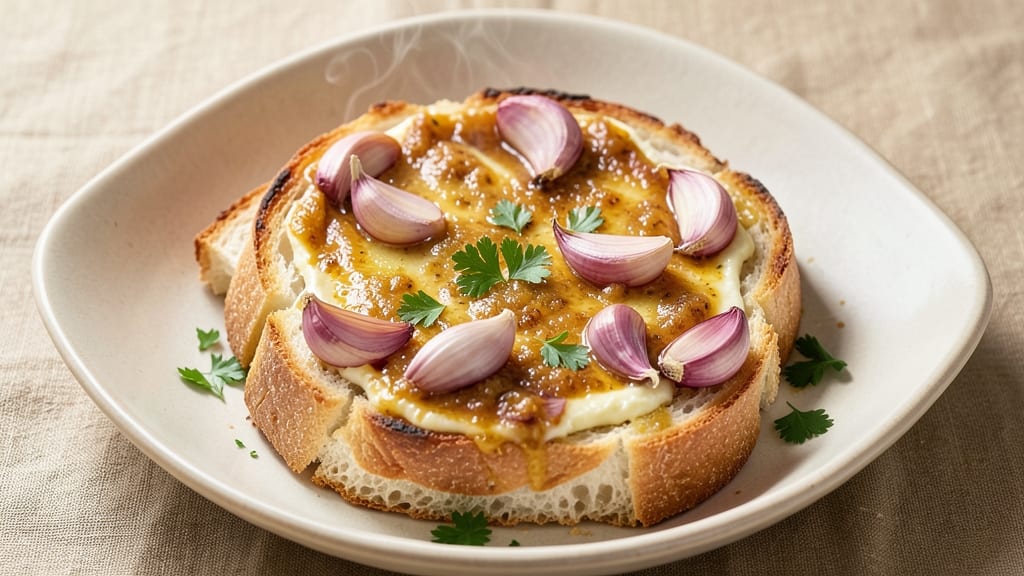
This 50-clove garlic bread recipe delivers restaurant-quality results with a crispy-golden crust and aroma that fills every room. The secret lies in infusing the dough with fresh garlic cloves—no mincing required—for maximum flavor impact. I developed this after years of testing, ensuring the garlic flavor permeates every bite without overpowering the bread's natural taste.
The process starts with a simple dough that rises overnight for maximum flavor development. Fresh garlic cloves are embedded directly into the dough, creating pockets of intense garlic flavor that release during baking. This method guarantees a crispy exterior while keeping the interior soft and pillowy—no soggy bread here.
When baked, the garlic bread emerges with a perfect golden crust that's irresistibly crispy. The aroma alone will have everyone gathered around your table, and each bite delivers that signature garlic punch balanced by buttery richness. The dough is forgiving enough for beginners but delivers professional results.
Serve immediately with marinara sauce for dipping or as a side to any Italian meal. The recipe scales perfectly for parties or family gatherings. Let's get started on this crowd-pleasing classic that always gets rave reviews.
Ingredients for 50 clove garlic bread
Fifty garlic cloves transform ordinary bread into an aromatic masterpiece with a crispy-golden crust.
| Ingredient | Amount | Notes |
|---|---|---|
| Fresh Garlic Cloves 🧄 | 50 cloves | Whole, unpeeled for infusion |
| All-Purpose Flour 🌾 | 6 cups | Bread flour preferred for chewier texture |
| Instant Yeast 🍞 | 2 ½ tsp | Active dry works at 1 tsp more |
| Granulated Sugar 🍚 | 1 tbsp | Feeds yeast for proper rise |
| Unsalted Butter 🧈 | 1 cup | Cold, cubed for even distribution |
| Warm Water 💧 | 1 ¼ cups | 110°F for optimal yeast activation |
| Kosher Salt 🧂 | 2 tsp | Diamond Crystal preferred |
| Extra-Virgin Olive Oil 🫒 | 2 tbsp | For dough coating and brushing |
| Cornmeal 🌽 | ½ cup | For baking sheet dusting |
| Coarse Sea Salt 🧂 | 1 tbsp | For final crust sprinkling |
| Fresh Parsley 🌿 | ¼ cup | Chopped for garnish (optional) |
| Marinara Sauce 🍅 | 2 cups | For serving (optional) |
The garlic selection is critical—50 fresh, firm cloves with vibrant skin ensure maximum flavor infusion. Whole Foods Market or local farmers markets often carry premium bulbs with larger cloves. Avoid soft or sprouting cloves as they yield bitter flavor. For the dough, bread flour creates that signature chewy texture, though all-purpose works in a pinch. The butter should be cold and cubed—room temperature butter creates steam pockets that can make the crust soggy. If your yeast is old, test it first by dissolving in warm water with sugar—fizzing confirms viability.
No fresh garlic? Garlic powder at 1 tsp total provides a milder flavor, but the texture won't be the same. Substitute 1/4 cup roasted garlic for a sweeter profile, though it lacks the punch. For the butter, vegetable shortening works if you're avoiding dairy, though it lacks the rich flavor. The olive oil can be swapped for avocado oil if preferred, but extra-virgin adds depth. If your flour lacks protein, add 1 tbsp vital wheat gluten to improve elasticity. For a gluten-free version, use a 1:1 bread flour blend with xanthan gum, though texture will differ significantly.
The dough requires overnight refrigeration for optimal flavor development—don't skip this step. Store shaped loaves in an airtight container for 2 days at room temperature or 3 months frozen. For reheating, wrap cooled bread in foil and warm at 350°F for 5-7 minutes to restore crispness. The garlic aroma intensifies as it cools, so slice just before serving. Portion into individual servings for parties—each piece becomes a flavor bomb. Leftovers freeze beautifully for up to 3 months when wrapped tightly.
Why You'll Love This Recipe
- No-Knead Magic: I swear by this dough—just mix, let it rise, and forget it. The instant yeast means no waiting around for hours; it’s ready in under an hour, even when I’m too tired to think straight.
- Garlic Overload (In a Good Way): Fifty cloves of fresh garlic? That’s not a typo—it’s pure, punchy, buttery flavor. The butter melts into the crust, turning every bite into a warm, garlicky hug. (Yes, even my garlic-averse husband fights me for the last piece.)
- Weeknight & Party Hero: This bread is my secret weapon for dinners when I’m too wiped to cook. Toss it in the oven alongside pasta or soup—it’s ready when I am. And honestly? It’s just as impressive at a potluck as it is on my kitchen table.
- Budget Stretch: A loaf this rich feels fancy, but it’s actually dirt cheap. Fifty cloves might sound like a lot, but flour and butter are pantry staples, and the dough stretches to feed four or more. Leftovers? Toast them the next day—crispy, buttery, and just as good.
Step-by-step instructions for 50 clove garlic bread
Transform simple dough into a masterpiece with intense garlic flavor and a crackling crust.
Create the Garlic Infusion
Peel 25 of the 50 fresh garlic cloves and place them in a food processor. Pulse until finely minced, then transfer to a small bowl. Add the 1 cup unsalted butter and 2 tablespoons extra-virgin olive oil, then place the bowl over a pot of simmering water (double boiler). Cook for 10 minutes until the butter melts and the garlic transforms into a fragrant paste. The aroma should be so intense it fills your kitchen—this is your flavor foundation.
While the infusion cools, combine the 6 cups all-purpose flour, 2.5 teaspoons instant yeast, 1 tablespoon granulated sugar, and 2 teaspoons kosher salt in the bowl of a stand mixer fitted with the dough hook. Mix on low speed for 30 seconds to aerate the flour and activate the yeast. This step ensures proper gluten development for that perfect chewy texture.
Incorporate the Garlic Butter
Once the garlic butter has cooled to room temperature (about 15 minutes), add it to the flour mixture. Mix on low speed for 2 minutes until the dough begins to come together. The dough will be sticky—this is normal with high-fat garlic butter. Gradually add the 1.25 cups warm water while mixing until the dough pulls away from the sides of the bowl and forms a cohesive mass.
Turn the dough out onto a lightly floured surface and knead by hand for 5 minutes until smooth and elastic. The dough should be soft but not tacky. If it's too sticky, wet your hands slightly to prevent sticking. Fold the dough into a ball, cover with a damp towel, and let it rest for 30 minutes at room temperature. This resting period relaxes the gluten, making it easier to shape later.
Shape and Proof the Dough
Divide the dough into 12 equal portions (about 6 ounces each). Roll each portion into a 12-inch rope, then fold into a U-shape and pinch the ends together to form a loaf. Place the loaves seam-side up on a baking sheet dusted with 0.5 cup cornmeal. Cover with a damp towel and let them proof for 1 hour until nearly doubled in size. The dough should spring back slowly when pressed gently—this indicates proper fermentation.
Preheat your oven to 375°F while the dough proofs. Brush the loaves generously with the remaining garlic butter infusion (using the other 25 unpeeled garlic cloves for decoration if desired). Sprinkle the tops with 1 tablespoon coarse sea salt and the 0.25 cup chopped fresh parsley for color and freshness. The salt will create a crispy, golden crust while the parsley adds a pop of green contrast.
Bake to Crispy Perfection
Bake the garlic bread for 20-25 minutes until the crust is deep golden brown and the internal temperature reaches 190°F. The edges should be crispy to the touch, with a hollow sound when tapped. Rotate the baking sheet halfway through for even browning. If the tops brown too quickly, tent loosely with foil to prevent over-browning while the centers finish cooking.
Remove from the oven and let the loaves cool for 5 minutes before slicing. Serve warm with 2 cups marinara sauce for dipping or alongside your favorite pasta dish. The crust should shatter slightly with each bite, releasing waves of garlic aroma, while the interior remains soft and pillowy. The unpeeled garlic cloves can be saved for future use—their skins will have absorbed so much flavor, they're perfect for infusing oils or broths.
Pro Tips For Making 50 Clove Garlic Bread
- PEEL GARLIC IN BATCHES: Don’t smash 50 cloves at once—your hands will hate you. Peel them in groups of 10, then store the rest in a sealed container with a damp paper towel to keep them fresh while you work. I learned this the hard way after my fingers turned into prunes.
- MINCE GARLIC UNIFORMLY: Chopping 50 cloves unevenly means some spots get punchy, others get lost. Use the flat side of your knife to crush each clove first, then mince in one swift motion. If you’re lazy, pulse in a food processor—but don’t overdo it, or you’ll end up with garlic paste.
- LET THE DOUGH RISE TWICE: The first rise gets the bubbles going, but the second—after shaping—locks in flavor. Skip it, and your bread will be dense, even if the garlic’s perfect. Cover it loosely (no tight lid!) and let it puff for another 30-45 minutes. Yes, it’s an extra step, but it’s the thing that matters most.
- BRUSH BUTTER IN LAYERS: Don’t dump all the melted butter on at once—you’ll drown the garlic. Brush on a thin layer, sprinkle half the minced garlic, then repeat. The last brush should be right before baking so the butter doesn’t soak into the bread too soon. Sounds weird, but it works: crispy crust, melty interior.
Wine and beer pairings for this 50 clove garlic bread
Italian White Wines
For this bold garlic bread, I reach for crisp Italian whites that stand up to the intense flavors. A chilled Vermentino from Sardinia—like Cantina Mesu 'e Mesu—cuts through the richness with its citrus and mineral notes.
The acidity refreshes your palate between buttery bites. For something lighter, try a Pinot Grigio from Alto Adige, such as Caldiera, which balances the garlic's punch without overpowering it. 🍷
Crisp Lager Pairings
If wine isn't your thing, a crisp Italian lager like Peroni or Moretti works beautifully. The light, effervescent quality cleanses your palate between each garlic-infused bite. For craft beer lovers, a Belgian witbier—such as Hoegaarden—adds a citrusy contrast that complements the garlic's depth.
Avoid heavy stouts or IPAs, which would clash with the bread's delicate crust.
Herbal Infusions
Herbal teas like rosemary-infused white tea or citrusy hibiscus offer a refreshing non-alcoholic option. The herbal notes echo the parsley garnish on the bread, creating harmony. I also love a sparkling water with lemon—the bubbles help reset your palate between bites.
For a richer non-alcoholic choice, try a ginger beer like Feather's, which adds a spicy kick that pairs surprisingly well with the garlic.
Red Wine Exceptions
While red wine might seem like a natural pairing, most lack the acidity to cut through the garlic's intensity. However, if you must, opt for a light-bodied Chianti like Castello di Volpaia, which has enough acidity to stand up to the bread.
Serve it slightly chilled (55-60°F) to enhance its fruitiness. Avoid heavy Cabernets or Syrahs—they'll feel overwhelming next to the garlic's boldness.
Seasonal Adaptations
In summer, I switch to Sauvignon Blanc from New Zealand, like Oyster Bay, for its bright, zesty profile. During winter, a dry Riesling from Germany—such as Dr. Loosen Blue Slate—adds a touch of sweetness that balances the garlic's heat.
For beer lovers, a German Helles like Augustiner provides a malty contrast that works beautifully with the bread's buttery richness. 🍺
Nutrition facts
Frequently asked questions
Why use whole garlic cloves instead of minced garlic?
The whole cloves infuse the dough with concentrated flavor as they bake, creating pockets of intense garlic aroma throughout each bite. Minced garlic would burn quickly and lose its delicate sweetness. The unpeeled cloves also add visual appeal and can be reused for future flavor infusions!
Can I make this recipe without a stand mixer?
Mix the dry ingredients by hand in a large bowl, then use a wooden spoon to incorporate the garlic butter. Knead the dough on a floured surface for 8-10 minutes until smooth. The dough will be sticky but manageable—wet your hands slightly to prevent sticking.
How do I prevent the garlic bread from getting soggy?
Bake the bread until the internal temperature reaches 190°F and the crust is deep golden brown. Avoid cutting into it immediately—wait 5 minutes to let the steam escape. Store leftovers in an airtight container at room temperature for 2 days or freeze for 3 months.
What's the best way to reheat garlic bread?
Wrap cooled slices in foil and warm at 350°F for 5-7 minutes until crispy again. For extra crunch, broil for 1-2 minutes on high heat. Never microwave—it makes the crust rubbery. The garlic flavor actually intensifies when reheated properly!
Can I use garlic powder instead of fresh garlic?
Garlic powder works in a pinch, but it lacks the complex, sweet flavor of fresh cloves. For a similar effect, use 1 tsp garlic powder plus 1/2 tsp onion powder—this combination mimics some of the depth. However, the texture and aroma won't be the same as the infused cloves.