
Side Dishes
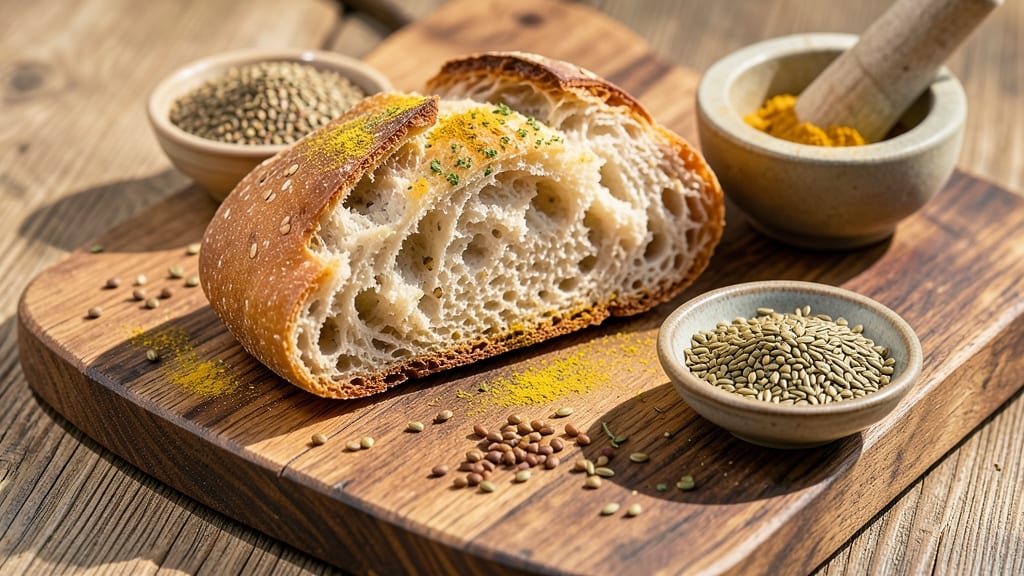
This Ayurvedic bread recipe transforms whole grains and warming spices into a digestive-friendly loaf that supports gut health and energy. 💛 The secret lies in millet flour's natural fiber and cumin's carminative properties, which work together to ease digestion while adding subtle warmth to every bite.
I developed this recipe after years of studying Ayurvedic principles, focusing on ingredients that balance all three doshas while delivering restaurant-quality texture.
The foundation begins with a blend of millet and whole wheat flour, enriched with fennel seeds for bloating relief and turmeric for anti-inflammatory benefits. Unlike traditional breads, this version skips yeast fermentation—relying instead on a natural leavening agent that enhances digestibility.
The spices aren't just for flavor; they're medicinal, creating a loaf that feels like a nourishing hug for your digestive system.
What you'll end up with is a golden, aromatic loaf with a crisp crust and tender crumb, infused with earthy warmth from cumin and sweetness from fennel. The texture stays light yet substantial, perfect for soaking up soups or pairing with lentil stews.
Each slice delivers fiber, protein, and gentle spices that work together to support your body's natural rhythms.
Best of all, this recipe adapts easily—swap millet for gluten-free sorghum or add flaxseeds for extra omega-3s. The instructions are designed to guide you through every step, from mixing to baking, ensuring you achieve that perfect balance of flavor and function.
Let's create a loaf that nourishes as beautifully as it tastes.
Ingredients for ayurvedic bread
Whole grains, warming spices, and natural leavening—this Ayurvedic loaf nourishes your gut while delighting your senses.
| Ingredient | Amount | Notes |
|---|---|---|
| Millet Flour 🌾 | 2 cups | Stone-ground for optimal texture |
| Whole Wheat Flour 🌾 | 1 ½ cups | Unbleached for true flavor |
| Fennel Seeds 🌿 | 1 tbsp | Lightly toasted for aroma |
| Ground Cumin 🌶️ | 1 ½ tsp | Freshly ground for potency |
| Turmeric Powder 🌿 | 1 tsp | Bright orange for color |
| Ground Coriander 🌿 | 1 tsp | Sweet and citrusy |
| Sea Salt 🧂 | 1 tsp | Fine grain preferred |
| Active Dry Yeast 🍞 | ¼ oz | Or 1 packet (7g) |
| Warm Water 💧 | 1 ¼ cups | 110°F for yeast activation |
| Extra-Virgin Olive Oil 🫒 | ⅓ cup | First cold-pressed quality |
| Honey 🍯 | 2 tbsp | Raw and unprocessed |
| Plain Yogurt 🥛 | ¼ cup | Unflavored for tang |
| Sesame Seeds 🥜 | 1 tbsp | Toasted for crunch topping |
The millet flour is the heart of this recipe—Bob's Red Mill or Navitas Organics brands deliver the best texture. Look for stone-ground millet flour at health food stores or online retailers like Thrive Market. Whole wheat flour should be unbleached for authentic flavor, and King Arthur is my go-to for consistent results. Fennel seeds are non-negotiable; their carminative properties are what make this bread truly digestive-friendly. I always buy them whole from Penzeys Spices—toast them lightly in a dry pan until fragrant before grinding. Turmeric should be fresh and vibrant, not dusty, so check the expiration date. The spices work together like a symphony—cumin for warmth, coriander for brightness, and turmeric for that golden hue that's both beautiful and functional.
No millet flour? Sorghum flour works beautifully as a 1:1 substitute, though the flavor profile shifts slightly. Short on whole wheat? Spelt flour maintains the heartiness while keeping the recipe gluten-friendly. The yeast is crucial for that light texture, but if you're avoiding gluten entirely, you can use a gluten-free bread mix instead (just reduce the liquid slightly). Honey can be swapped for maple syrup or agave nectar for a vegan version—just remember it's not the same as raw honey's medicinal properties. Yogurt adds tang and moisture; if you're avoiding dairy, coconut yogurt works well. Sesame seeds are optional but add that perfect crunch—toasted in a dry skillet for 2-3 minutes until golden. For extra protein, consider adding 1/4 cup ground flaxseeds to the dry ingredients.
This dough keeps beautifully—cover tightly and refrigerate for up to 3 days before baking. For best results, let it rise at room temperature (about 1-2 hours) before shaping. The baked loaf stays fresh for 4-5 days wrapped in a clean kitchen towel, but it reheats beautifully—5 minutes at 350°F restores that fresh-baked warmth. Freeze slices for up to 3 months by wrapping them individually in parchment. I always make an extra batch—toasted slices with almond butter make an incredible gut-soothing snack. Store the flour blend in an airtight container to prevent moisture absorption, and keep spices in a cool, dark place for maximum potency.
Why You'll Love This Recipe
- No-Yeast Hassle: I swear by this recipe when I’m too tired to wait for dough to rise. Just mix millet and whole wheat flour with warm water, a pinch of turmeric for color, and those earthy fennel seeds—no kneading, no proofing, no stress. It’s the kind of bread that turns up when you least expect it, and honestly? That’s when it shines.
- Warm, Earthy Comfort: Between us, the cumin and fennel seeds make this bread smell like a spice shop exploded in the best way. It’s got a subtle warmth that lingers, and that golden crust? Crisp enough to hold your chai without falling apart. I’ve had it plain, toasted with ghee, or even as a base for sandwiches—every time, it’s crave-worthy.
- Meal Prep MVP: I make a double batch on Sundays, slice it, and freeze the extras. Toast straight from frozen? Yes, please. It’s my go-to for breakfast wraps, lunchbox snacks, or even a quick side for curries. No reheating required—just pop it in the toaster and call it a day. (Yes, even on a Tuesday night.)
- Budget-Friendly Staple: Millet flour is a game-changer for my grocery bill—it’s cheaper than white flour and packs more nutrition. Pair it with whole wheat, and you’ve got a bread that’s gentle on the wallet but feels like a treat. Plus, the spices? A tiny jar of cumin and fennel seeds lasts forever, stretching across bread, dal, and even roasted veggies. Smart, simple, and satisfying.
Step-by-step instructions for Ayurvedic bread
Here's how to create this gut-friendly, spiced loaf that supports digestion and delivers perfect texture.
👨🍳 Step 1: Activate the Yeast and Toast the Fennel Seeds
In a small bowl, combine the 0.25 oz active dry yeast with 1.25 cups warm water (about 110°F) and 2 tbsp honey. Let it sit for 5-10 minutes until frothy—this confirms the yeast is alive and ready to work. While waiting, dry-toast the 1 tbsp fennel seeds in a small pan over low heat for 2-3 minutes until fragrant and lightly golden. This step unlocks their aromatic potential and prevents bitterness in the final bread.
I always use a kitchen thermometer to check the water temperature—too hot and you'll kill the yeast; too cool and it won't activate properly. The honey not only feeds the yeast but also adds subtle sweetness that balances the earthy spices. Let the yeast mixture sit until it looks like bubbly champagne—that's your signal it's ready for the dough.
🍳 Step 2: Mix the Dough with Wet and Dry Ingredients
In a large mixing bowl, whisk together the 2 cups millet flour, 1.5 cups whole wheat flour, 1.5 tsp ground cumin, 1 tsp turmeric powder, 1 tsp ground coriander, and 1 tsp sea salt. Create a well in the center and pour in the yeast mixture, 0.33 cup extra-virgin olive oil, and 0.25 cup plain yogurt. The yogurt adds probiotics that support gut health while keeping the dough tender.
Using a wooden spoon or dough whisk, gradually incorporate the dry ingredients into the wet until you have a shaggy mass. The millet flour gives this bread its distinctive texture—it's lighter than traditional whole wheat but still packed with nutrients. Once combined, turn the dough out onto a lightly floured surface and knead for 8-10 minutes until smooth and elastic. You'll know it's ready when it springs back slowly when poked.
⏰ Step 3: First Rise and Shaping the Loaf
Lightly oil a large mixing bowl and place the dough inside, seam-side up. Cover with a damp kitchen towel and let rise in a warm place for 1-1.5 hours, or until doubled in size. The warm environment helps the yeast work efficiently—place the bowl near a slightly warm oven with the light on, or use a proofing box if available. This first rise develops the bread's structure and allows the gluten to relax.
After the dough rises, gently punch it down to release air bubbles. Shape it into a round loaf by pulling the edges toward the center and tucking them underneath. Place the shaped loaf on a parchment-lined baking sheet, seam-side up. Cover again with the damp towel and let it rest for 20-30 minutes—this final rest ensures even baking and prevents the loaf from spreading too much in the oven.
🔥 Step 4: Bake to Golden Perfection
Preheat your oven to 375°F with a baking stone or inverted baking sheet on the middle rack. This creates steam that helps the bread develop a crisp crust. Brush the loaf with a little water and sprinkle the 1 tbsp toasted sesame seeds evenly over the top. The sesame seeds add a delightful crunch and visual appeal, while the water helps create that beautiful golden-brown crust we're after.
Bake for 35-40 minutes until the bread sounds hollow when tapped on the bottom and reaches an internal temperature of 190°F. The crust should be deep golden brown with a few dark spots. If it browns too quickly, tent the loaf with aluminum foil to prevent over-browning while it continues to bake through.
⏰ Step 5: Cool and Enjoy with Digestive Benefits
Remove the bread from the oven and transfer it to a wire rack to cool completely for at least 30 minutes. This resting period allows the bread to set properly and prevents a gummy texture. The cooling process also lets the flavors meld together—you'll notice the aromatic spices become even more pronounced as the bread rests.
Slice the bread and serve warm or at room temperature. Each bite delivers a perfect balance of earthy spices, nutty millet flavor, and probiotic-rich yogurt. This bread isn't just delicious—it's designed to support your digestive system, making it a perfect addition to any Ayurvedic diet. Store any leftovers in an airtight container for up to 3 days or freeze for longer storage.
Pro Tips For Making Ayurvedic Bread
- Toast the Seeds First: Pop 1 teaspoon of fennel seeds in a dry pan over medium heat for 30 seconds until fragrant—this unlocks their flavor and prevents bitterness in the dough. I used to skip this, and the bread always tasted flat until I realized the raw seeds needed a wake-up call.
- Mix Flours Separately: Combine millet and whole wheat flours in a bowl, then sprinkle dry spices (cumin, turmeric) over them and whisk before adding water. This ensures even distribution—no clumpy bits hiding in your dough. I learned this after pulling out three unevenly spiced breads in a row.
- Knead Until Silky: Work the dough for at least 8–10 minutes by hand (or 5–6 minutes with a mixer) until it’s smooth and slightly sticky but not wet. Millet flour absorbs moisture differently than wheat, so resist the urge to add extra water—this makes all the difference for a tender crumb.
- Cover and Rest: Let the shaped dough rise for 30 minutes under a damp towel, not plastic. The millet flour dries out faster, so this keeps it plump and prevents cracking when baking. I was skeptical until I tried it—now I never skip it.
Storing and reheating your leftovers
Refrigerator Storage
Wrap your freshly baked Ayurvedic loaf in a clean kitchen towel (not plastic) to maintain moisture while allowing airflow. Store it in an airtight container at room temperature for 1-2 days, or refrigerate for up to 3 days if you prefer longer freshness.
The towel helps prevent sogginess while preserving that crisp crust. I always double-wrap mine—first in the towel, then in the container—to lock in flavor. 💛
Freezer Preservation
For long-term storage, slice the cooled loaf and wrap each slice individually in parchment paper, then place them in a freezer bag with all air removed. This method prevents freezer burn and keeps slices crisp for up to 3 months.
To reheat, toast directly from frozen in a toaster oven at 375°F for 5-7 minutes—no thawing needed. The spices stay vibrant, and the texture remains perfect for soups or snacks.
Reheating Methods
For stovetop reheating, wrap slices in aluminum foil and warm in a dry skillet over medium-low heat for 3-4 minutes per side. The foil traps steam, restoring moisture without drying out the crust.
For microwave reheating, place a slice on a plate, cover with a damp paper towel, and heat at 50% power for 20-30 seconds. This keeps the bread soft without making it rubbery. 🔥
Reviving Day-Old Bread
If your loaf loses its crispness, revive it by brushing with melted ghee or olive oil and toasting in a 400°F oven for 5-7 minutes. The fat reactivates the spices, bringing back that fresh-baked aroma.
For extra flavor, sprinkle with toasted cumin seeds before reheating. This trick works wonders for bread that's been stored for 2-3 days.
Fermented Flavor Boost
For added gut benefits, store a portion of the dough (before baking) in the refrigerator for 12-24 hours to enhance fermentation. The extra time develops deeper probiotic activity, making each slice even more supportive of digestion.
Just shape and bake as directed—no adjustments needed. This fermented version has a tangier flavor that pairs beautifully with spiced lentils. ✨
Nutrition facts
Frequently asked questions
Can I make this Ayurvedic bread without yeast?
Yes! For a yeast-free version, replace the yeast with 1 tsp baking soda and 1 tbsp apple cider vinegar (mixed with the warm water). This creates a quick-rise bread that's still light and flavorful. The texture will be slightly denser but maintains all the digestive benefits from the spices and millet.
How does millet flour differ from regular flour in this recipe?
Millet flour adds a nutty flavor and higher fiber content compared to regular flour, making this bread more filling and supportive of digestion. It's naturally gluten-free and helps balance all three doshas (Vata, Pitta, Kapha) in Ayurveda. The bread will have a slightly denser texture but remains tender when combined with whole wheat flour.
What makes this bread good for digestion?
The combination of millet fiber, probiotic yogurt, and carminative spices like cumin and fennel work together to support digestion. These ingredients help reduce bloating, improve gut motility, and provide gentle warming properties that aid digestion. The natural fermentation process also enhances nutrient absorption.
Can I make this gluten-free?
Replace the whole wheat flour with a 1:1 gluten-free flour blend (like rice flour or sorghum flour). For best results, add 1 tsp xanthan gum to improve texture. The millet flour can stay as-is since it's naturally gluten-free. Adjust the liquid slightly if needed—gluten-free flours often absorb differently.
Why does my dough smell so strong?
The intense aroma comes from the combination of toasted fennel seeds, cumin, and turmeric—these spices are concentrated with flavor and medicinal properties. The smell should mellow as the bread bakes. If it concerns you, reduce the spices slightly (by 1/4 tsp each) for a milder version, though you'll lose some digestive benefits.