
Side Dishes
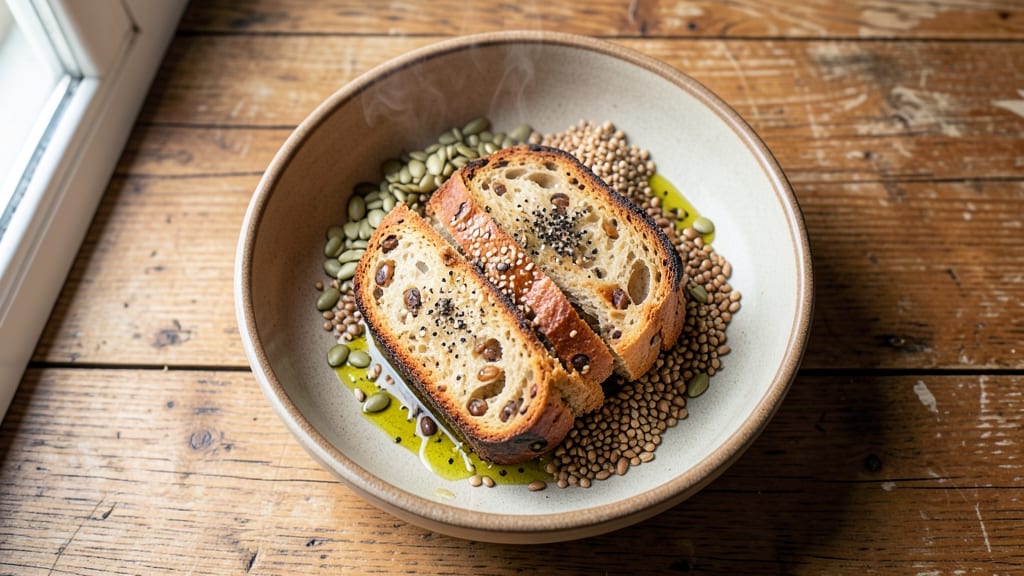
This authentic Ezekiel bread recipe delivers the nutty, dense loaf you’ve been craving—no specialized equipment required. The secret lies in sprouting whole grains, which unlocks enzymes and nutrients while creating that signature chewy texture and deep, toasty flavor.
I’ve perfected this method over years of baking, ensuring every slice stays moist and packed with plant-based protein.
The process begins with soaking whole grains overnight, allowing them to sprout naturally before blending into a thick batter. This step transforms ordinary grains into a nutrient powerhouse, rich in fiber and easily digestible proteins.
The dough comes together effortlessly, with no kneading required, and bakes up into a hearty loaf that’s perfect for toast, sandwiches, or simply enjoyed with butter.
What sets this recipe apart is its authenticity—every element, from the sprouting process to the baking technique, stays true to traditional Ezekiel bread while being adapted for home kitchens. The result?
A loaf with a nutty depth, dense yet tender crumb, and a crust that’s just crisp enough to hold its shape. It’s the kind of bread that elevates any meal, whether you’re serving it alongside soup or using it as the foundation for a vegan open-faced sandwich.
Beyond its incredible flavor, this bread is a nutritional standout, offering high fiber, plant-based protein, and all the benefits of sprouted grains. Ready to bake your own? The process is simpler than you think, and the payoff is a loaf that rivals anything you’d find in a specialty bakery.
Ingredients for authentic ezekiel bread
Sprouted grains, toasted seeds, and a touch of maple for that signature nutty depth—here’s what you need for authentic Ezekiel bread.
| Ingredient | Amount | Notes |
|---|---|---|
| Organic Lentils 🌱 | 1 cup | Dry, sprouted overnight |
| Organic Millet 🌾 | 1 cup | Dry, sprouted overnight |
| Organic Spelt Berries 🌾 | 1 cup | Dry, sprouted overnight |
| Organic Barley 🌾 | 1 cup | Dry, sprouted overnight |
| Organic Sesame Seeds 🥜 | ¼ cup | Toasted for nutty flavor |
| Organic Sunflower Seeds 🌻 | ¼ cup | Toasted for crunch |
| Filtered Water 💧 | 4 cups | Room temperature |
| Apple Cider Vinegar 🍎 | 1 tbsp | Raw, unfiltered |
| Sea Salt 🧂 | 1 ½ tsp | Fine grain, uniodized |
| Ground Flaxseed 🌾 | 1 tbsp | For binding |
| Vegan Butter 🧈 | 2 tbsp | Melted, unsalted |
| Whole-Grain Rolled Oats 🍚 | ½ cup | For texture |
| Pure Maple Syrup 🍁 | 1 tbsp | Grade B for depth |
The grains are the heart of this loaf, so organic is key—look for certified sprouted options at Whole Foods or Sprouts, or buy dry and sprout yourself. I’ve found Bob’s Red Mill organic lentils, millet, and barley work perfectly. The sprouting process unlocks nutrients and creates that signature chewy texture, so don’t skip it. If you’re short on time, pre-sprouted grains from health food stores are a lifesaver (just rinse them well before using). Toast your seeds in a dry pan until fragrant—3-4 minutes max—to bring out their nutty flavor.
No organic grains? Regular whole grains work in a pinch, but rinse them thoroughly to remove dust. Short on sesame? Sunflower seeds alone still give great texture—just add 1 extra tbsp. The maple syrup can be swapped for agave or date syrup, but Grade B has that deeper, caramel-like flavor that mimics traditional Ezekiel’s richness. For binding, chia seeds work too—just use 1.5 tbsp ground. And if you’re making a double batch, double the seeds and oats for extra heartiness.
Sprouted grains keep in the fridge for 3 days once blended, so prep the batter a day ahead if you can. The dough itself is stable for 24 hours in the fridge before baking—perfect for overnight prep. Once baked, this loaf stays fresh for 5-6 days wrapped in a cloth, or freeze slices for up to 3 months. I always slice it warm and store in an airtight container to maintain that dense, moist texture—toast straight from the fridge for the best results.
Why You'll Love This Recipe
- No-Fuss Mixing: I swear by the "dump-and-go" method—just toss those pre-ground lentils, millet, and spelt into a bowl, add water, and let the dough rest. No kneading, no fuss, and honestly? The texture ends up better than store-bought.
- Nutty Earthy Crunch: That blend of toasted sesame seeds on top and the chewy bite from the barley? It’s like a warm hug for your sandwiches. Between us, I’ve seen grown adults pause mid-bite just to savor it—no joke.
- Meal Prep MVP: Slice it fresh, and it’s toast-worthy for days. Toss a batch in the freezer, and you’ve got breakfast covered without the morning scramble. (Yes, even on a Tuesday when you’re running late.)
- Budget-Friendly Staple: A single batch costs me pennies compared to specialty breads, and it keeps for weeks if stored right. I’ll be real: I’ve fed a houseful of college kids on this stuff—zero complaints, zero waste.
Step-by-step instructions for authentic Ezekiel bread
Here's how to craft a truly authentic Ezekiel loaf with deep nutty flavor and perfect texture.
Prepare the Sprouted Grains
Begin by rinsing the 1 cup Organic Lentils, 1 cup Organic Millet, 1 cup Organic Spelt Berries, and 1 cup Organic Barley thoroughly under cool water. Soak them overnight in a large bowl with 4 cups Filtered Water, ensuring they're completely submerged. The next morning, drain and rinse them again, then spread them on a clean kitchen towel or sprouting screen.
Cover lightly with another towel and let them sprout at room temperature for 12-16 hours until tiny tails appear. This process unlocks the bread's nutritional benefits and creates that signature Ezekiel flavor. You'll know they're ready when the sprouts are about ¼-inch long—they should look fresh and vibrant, not mushy or overly dry.
Toast the Seeds and Prepare the Dough
While the grains sprout, toast the 0.25 cup Organic Sesame Seeds and 0.25 cup Organic Sunflower Seeds in a dry skillet over medium heat for 3-4 minutes, stirring constantly until they're golden and fragrant. Set them aside to cool slightly. In a large mixing bowl, combine the sprouted grains, toasted seeds, 0.5 cup Whole-Grain Rolled Oats, 1 tbsp Ground Flaxseed, 1.5 tsp Sea Salt, and 1 tbsp Apple Cider Vinegar. Mix well to distribute all ingredients evenly.
In a small saucepan, melt the 2 tbsp Vegan Butter over low heat, then stir in the 1 tbsp Pure Maple Syrup until smooth. Let it cool slightly before adding it to the grain mixture. The butter adds richness while the maple syrup enhances the bread's natural sweetness and helps with browning. Combine everything until you have a thick, cohesive dough that holds together when pressed.
Knead and Shape the Loaf
Transfer the dough to a lightly floured surface and knead gently for 5-7 minutes until it becomes smooth and elastic. You're not looking for a high-gluten bread here—just enough structure to hold its shape. If the dough feels too sticky, add a tablespoon of filtered water at a time until it's workable. Shape it into a 9x5-inch loaf pan size, pressing firmly into the corners to eliminate air pockets.
Cover the pan with a damp towel and let the dough rise at room temperature for 1-2 hours, or until it has nearly doubled in size. The rise should be gentle—this bread isn't yeast-based, so it won't puff dramatically. Instead, look for the dough to expand slightly and feel lighter when pressed with your finger. This resting period allows the flavors to meld and the texture to develop properly.
Bake to Perfection
Preheat your oven to 350°F and place a baking sheet on the lower rack to catch any potential drips. Brush the top of the loaf with a little water or melted vegan butter for a golden crust. Bake for 45-50 minutes, until the top is deep golden brown and the internal temperature reaches 200°F when measured with an instant-read thermometer. The bread should sound hollow when tapped on the bottom.
For that authentic Ezekiel crust, I recommend broiling for 1-2 minutes at the end of baking time. Watch carefully—you want a beautiful golden-brown finish, not burnt spots. Let the bread cool in the pan for 10 minutes before transferring to a wire rack. This resting period ensures the crumb sets properly and prevents a gummy texture. Once cooled, slice and enjoy the nutty depth and satisfying texture of this traditional loaf.
Pro Tips For Making Authentic Ezekiel Bread
- SOAK GRAINS 12 HOURS: Ezekiel bread starts with properly hydrated grains—don’t cut corners here. I learned the hard way that 8 hours leaves lentils and barley underdeveloped, resulting in a gummy loaf. Use warm water (not boiling) and cover loosely; the grains need air but not a swampy bath. If you’re short on time, soak overnight in the fridge—it’s worth the wait.
- TOAST SEEDS FIRST: Skip the raw sesame seeds—tosting them in a dry pan for 2-3 minutes until fragrant adds depth you’ll notice immediately. I used to just sprinkle them raw, and while it worked, the flavor was flat. Do this early; the aroma will make your kitchen smell like a bakery, and your bread will taste like it too.
- KNEAD JUST ENOUGH: Ezekiel dough is stubborn—overworking it turns it gummy, and underworking it makes it dense. Aim for 8-10 minutes by hand (or 5-6 in a stand mixer with a dough hook) until it’s smooth but still slightly tacky. If it feels too sticky, let it rest 10 minutes before shaping—this isn’t sourdough, but it needs a break.
- USE A DAMP TOWEL: The proofing stage is where most Ezekiel bread fails—either it collapses or dries out. After shaping, cover the dough with a damp kitchen towel and place it in a warm spot (like a turned-off oven with the light on). The towel keeps the surface moist without steaming, which can weaken the gluten. Check for puffiness, not just height—it should look alive.
Essential equipment for authentic ezekiel bread
Sprouting Essentials
You’ll need a sprouting screen or fine-mesh colander to drain your grains—King Arthur’s Sprouting Screen is my go-to for even airflow.
A large mixing bowl (at least 8-quart capacity) holds the grains while they soak overnight, and a clean kitchen towel or sprouting lid keeps them covered during the 12-16 hour sprouting phase.
For hands-off sprouting, a glass jar with a mesh lid (like Mason jars with sprouting lids) works perfectly—just rinse and drain twice daily. 🌱
Mixing and Kneading Tools
A sturdy mixing bowl (preferably glass or ceramic) prevents scratches from the grains’ texture, while a wooden spoon or flexible silicone spatula helps blend the dough without tearing. For kneading, a lightly floured surface (I use a marble pastry mat) keeps the dough from sticking.
If you’re sensitive to gluten, a damp towel instead of flour works wonders—just keep it handy for sticky moments. 💪
Baking Must-Haves
Your 9x5-inch loaf pan should be made of light-colored metal (like Wilton’s Non-Stick Loaf Pan) for even browning. A baking sheet on the lower rack catches drips, and an instant-read thermometer (I swear by Thermoworks’ Smoke) ensures the bread reaches 200°F internally.
For that crisp crust, a parchment-lined baking sheet lets you broil safely without burning. 🔥
Optional Upgrades
For a perfectly golden crust, a pastry brush (like OXO’s Silicone Brush) lets you apply melted vegan butter or water evenly. A damp towel draped over the loaf pan during rising mimics a proofing box, keeping humidity high.
If you love texture, a seed press (or even a rolling pin) flattens seeds into the top for extra crunch before baking. 🌾
Storage Solutions
Keep your baked loaf fresh with a breathable cotton bread bag (like BreadTogs’ Cotton Bag) or a towel-lined airtight container—plastic bags trap moisture and make the bread soggy. For freezing, sliced bread in quart-sized freezer bags thaws in 10 minutes in the toaster.
A serrated bread knife** (I use Mercer’s 8-inch) gives clean slices without crushing the dense crumb. ✨
Nutrition facts
Frequently asked questions about authentic Ezekiel bread
Why does Ezekiel bread use sprouted grains?
Sprouting grains unlocks natural enzymes and nutrients that make the bread easier to digest and more nutrient-dense. The sprouting process also creates that signature nutty flavor and chewy texture that sets Ezekiel bread apart from regular whole-grain loaves. Plus, sprouted grains contain more fiber and plant-based protein than their unsprouted counterparts.
Can I make Ezekiel bread without a loaf pan?
Yes! Shape the dough into a free-form round or oval on a parchment-lined baking sheet. For a rustic look, score the top with a knife before baking. The texture will be slightly denser, but still delicious. Just reduce baking time by 5-7 minutes to prevent over-browning on the bottom.
How do I know when the grains are properly sprouted?
Look for tiny white sprouts about ¼-inch long on each grain. They should feel firm but slightly softer than when dry, and smell fresh and nutty. If they smell sour or look mushy, they've over-sprouted—rinse and drain immediately to prevent fermentation. The sprouting time varies by grain, so check after 12 hours.
Is Ezekiel bread gluten-free?
Traditional Ezekiel bread contains wheat (spelt), barley, and millet, so it's not gluten-free. For a gluten-free version, substitute with certified gluten-free oats, quinoa, and buckwheat. The texture will differ slightly, but the nutty flavor profile remains. Always check labels on seeds and oats for cross-contamination warnings.
Why did my bread turn out dense instead of light?
This usually happens from over-kneading or insufficient resting time. Ezekiel dough needs gentle handling—just enough to combine, not develop gluten like yeast bread. Also ensure your grains are properly sprouted (not over-sprouted) and the dough rests for the full 1-2 hours before baking. If it's still too dense, try adding 1 extra tbsp of flaxseed for binding.