
Side Dishes
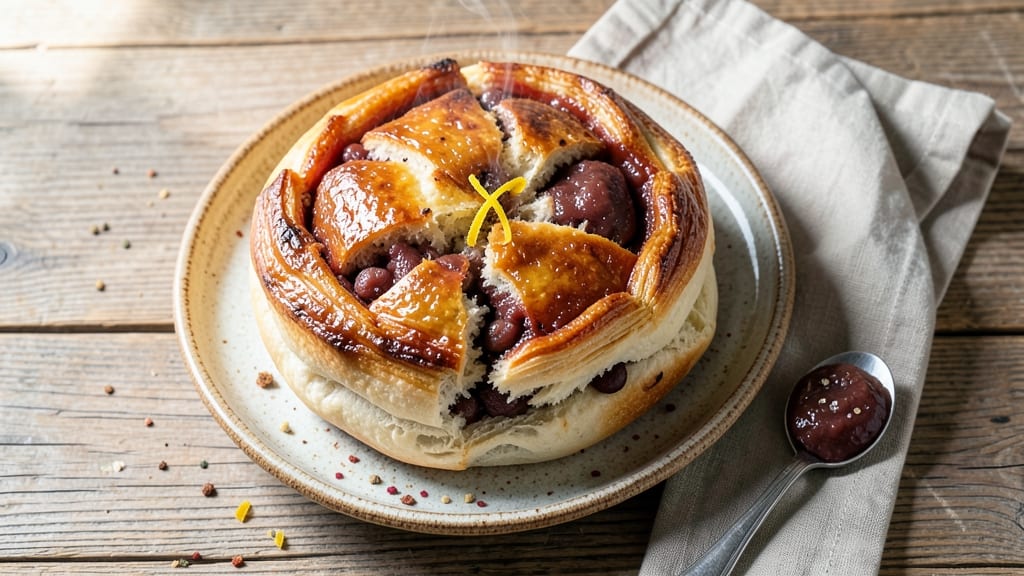
This Anpan bread recipe brings the comforting flavors of Japan to your kitchen with its iconic sweet red bean paste heart encased in a golden crust. The secret lies in balancing the dough's crispy exterior with a tender interior, while the anko filling delivers that signature melt-in-your-mouth texture.
I've perfected this technique over years of baking, ensuring every bite delivers authentic Japanese taste without requiring advanced skills.
The magic starts with the dough—a simple yet precise blend of flour, sugar, and butter that develops a satisfying crunch when baked. Meanwhile, the anko filling requires patience as you simmer azuki beans until they reach that perfect sweet-savory balance.
The shaping technique is what truly sets anpan apart, with the bean paste heart carefully placed before baking to create that signature visual appeal.
What you'll end up with is a bread that's both visually stunning and irresistibly delicious—crusty on the outside, soft on the inside, with a heart of sweet red bean paste that melts at the first bite.
This recipe delivers restaurant-quality results that will impress even the most discerning palates, all while being surprisingly approachable for home bakers.
Whether you're making it for a special occasion or simply craving something comforting, this anpan bread recipe is sure to become a staple in your baking repertoire.
The best part? You can easily adapt it to modern preferences with gluten-free dough or vegan anko. Let's get started on creating this Japanese classic!
Ingredients for anpan bread
Fourteen ingredients, two parts: dough and sweet bean heart. Authentic Japanese flavors with simple techniques.
| Ingredient | Amount | Notes |
|---|---|---|
| All-Purpose Flour 🌾 | 3 ½ cups | Sifted for light texture |
| Unsalted Butter 🧈 | ½ cup | Cold, cubed for dough |
| Granulated Sugar 🍚 | ¼ cup | White or light brown |
| Active Dry Yeast 🍞 | 2 ¼ tsp | Instant yeast works too |
| Warm Water 💧 | ¼ cup | 110°F for yeast activation |
| Salt 🧂 | ½ tsp | Fine sea salt preferred |
| Dried Azuki Beans 🌱 | 1 cup | Soaked overnight first |
| Granulated Sugar (for anko) 🍚 | ½ cup | Adjust to taste |
| Water (for anko) 💧 | 1 ½ cups | For simmering beans |
| Mirin 🍶 | 1 tbsp | For sweetness and shine |
| Sake 🍶 | 1 tbsp | Substitute with water if needed |
| Egg Yolk 🥚 | 1 whole | For egg wash |
| Sesame Seeds 🌾 | 1 tbsp | Toasted for garnish |
The azuki beans are the soul of anpan. Look for dried azuki beans at Asian markets—they're sweeter and richer than the canned kind. Soak them overnight (that's non-negotiable), then simmer until tender. Trader Joe's carries them if you can't find a specialty store. For the dough, Japanese-style bread flour makes it extra tender, but all-purpose works fine. I always use European-style butter (like Plugrá) for richer flavor, but regular unsalted butter is perfect too. The dough needs to be cold when shaping—work quickly if your kitchen warms up.
No mirin or sake? Substitute with equal parts water and sugar—it won't be traditional, but still delicious. For the anko, if you can't find azuki beans, substitute with sweet red kidney beans (soaked and cooked the same way). The egg wash is key for that golden crust—beat the yolk well for maximum shine. Short on sesame seeds? Toasted poppy seeds work too, though they lack that nutty Japanese flavor. The dough can be made a day ahead and refrigerated, which actually improves the texture—just let it sit at room temperature for 30 minutes before shaping.
Store the anko in an airtight container in the fridge for up to 1 week. The dough can be shaped and frozen unbaked for 2 months—just bake straight from frozen with 5 extra minutes. Fresh anpan is best eaten the same day, but leftovers keep well wrapped at room temperature for 2 days. For extra crispiness, bake again for 3-5 minutes after slicing. The sesame seeds keep best in a dark jar—use within 6 months for peak flavor.
Why You'll Love This Recipe
- No-Knead Magic: I swear by this dough—just mix, let it rise, and shape. The butter and sugar blend makes it tender without a single knead in sight, and honestly? That’s my kind of baking.
- Sweet-Savory Crunch: The sugar crust on the outside caramelizes into something addictive, while the soft, buttery interior stays rich. It’s the kind of contrast that makes you reach for a second slice before you even finish the first.
- Picnic or Snack: Between us, this bread is my go-to for lunchboxes, potlucks, or just a quick breakfast. Wrap it with jam, pack it for a hike, or serve it warm with tea—it works every time.
- Budget-Friendly Staple: Flour, butter, sugar—these are pantry basics that stretch far. A single batch feeds my family for days, and the leftovers? They disappear faster than I can reheat them. (Yes, even on a Tuesday night.)
Step-by-step instructions for anpan bread
Let's make this classic Japanese treat with a perfectly sweet bean paste center and flaky crust.
Prepare the Anko (Red Bean Paste)
Start by soaking the 1 cup dried azuki beans in plenty of cold water for at least 8 hours or overnight. This ensures they soften completely and blend smoothly. Drain and rinse them well before using.
In a medium saucepan, combine the soaked beans with 1.5 cups water (for anko), 0.5 cup granulated sugar (for anko), 1 tbsp mirin, and 1 tbsp sake. Bring to a boil over medium-high heat, then reduce to a simmer. Cook uncovered for 45-60 minutes, stirring occasionally, until the beans are tender and the mixture thickens to a paste-like consistency.
Use a potato masher or fork to mash the beans slightly, leaving some texture. The anko should be thick enough to hold its shape when dropped but still spreadable. Let it cool completely before using—this prevents the yeast from dying when incorporated into the dough.
Make the Dough
In a small bowl, dissolve the 2.25 tsp active dry yeast in 0.25 cup warm water (110°F). Let it sit for 5-10 minutes until frothy. In a large mixing bowl, combine the 3.5 cups all-purpose flour and 0.5 tsp salt. Make a well in the center and pour in the yeast mixture along with 0.25 cup granulated sugar. Mix until a shaggy dough forms.
Add the 0.5 cup cold, cubed unsalted butter and knead by hand for 8-10 minutes until the dough becomes smooth and elastic. If it's too sticky, add 1 tablespoon of flour at a time until it pulls away from the bowl. Cover the bowl with a damp towel and let the dough rise in a warm place for 1-2 hours, or until it doubles in size.
Shape and Fill the Dough
Punch down the risen dough to release air, then divide it into 4 equal pieces. Roll each piece into a 12-inch circle on a lightly floured surface. Place 2 tablespoons of cooled anko in the center of each circle. Gather the edges of the dough and pinch them together to form a sealed pouch, leaving a small opening at the top for steam to escape.
Roll each pouch into a 1-inch thick oval about 6 inches long. Place the shaped anpan on a parchment-lined baking sheet, seam-side down. Cover with a damp towel and let them rise for 30-45 minutes until puffy. Preheat your oven to 375°F while they rise.
Bake to Golden Perfection
Brush the tops of the anpan with the 1 whole egg yolk mixed with 1 tablespoon water for a shiny finish. Sprinkle with 1 tablespoon toasted sesame seeds for that authentic Japanese touch. Bake for 25-30 minutes until the crust turns a deep golden brown and sounds hollow when tapped on the bottom.
Let the anpan cool on a wire rack for 10 minutes before slicing. The crust should be crispy outside with a soft, pillowy interior, and the anko should be warm and gooey. Serve warm for the best experience—each bite should balance the sweet, nutty bean paste with the buttery, flaky crust.
Pro Tips For Making Anpan Bread
- Bloom Yeast Properly: Mix the warm water (110°F/43°C) with sugar first—it dissolves faster and gives the yeast a head start. After 5 minutes, if nothing’s bubbling, your yeast is dead, and you’re starting over. No point wasting flour on a failed dough.
- Cut Butter Cold: Use unsalted butter straight from the fridge—it’s firmer and mixes into the dough in clean, pea-sized chunks. I learned this the hard way after trying to knead in softened butter and ending up with a greasy, sticky mess that refused to hold shape.
- Avoid Over-Kneading: The dough should spring back when poked but still feel slightly tacky—not silky smooth like pizza dough. Overwork it, and the gluten tightens up, making the bread dense instead of soft and pillowy. Two minutes past the right texture, and you’ve ruined it.
- Seal the Filling Tight: Press the red bean paste into the center of the dough ball before sealing the edges—it prevents leaks during baking. Roll the dough gently over the paste, then pinch the seam shut like you’re sealing a letter. (Yes, even if it looks messy inside—it’ll bake up fine.)
Dietary considerations for these flavors
Gluten-Free Adaptation
For a gluten-free version, replace the all-purpose flour with a 1:1 gluten-free flour blend like Bob's Red Mill or King Arthur. I've found that adding 1 teaspoon xanthan gum to the mix helps mimic the dough's elasticity.
The anko filling remains unchanged, but the dough will be slightly denser—bake at 350°F for 30-35 minutes instead of 375°F to prevent over-browning. 🌾
Vegan Anko Options
Traditional anko uses honey or sugar, but for a vegan version, substitute the 1 tablespoon mirin and 1 tablespoon sake with 2 tablespoons maple syrup and 1 tablespoon water. The azuki beans will still absorb the sweetness beautifully.
For extra richness, add 1 teaspoon coconut oil to the anko mixture while simmering. The dough can stay as-is since it's already vegan-friendly.
Nut-Free Alternatives
Sesame seeds are traditional, but if you're avoiding nuts, try toasted pumpkin seeds or poppy seeds for a similar crunch. For a completely nut-free topping, skip the seeds entirely and focus on the egg wash for shine.
The flavor will still be rich and satisfying—just less textured. Always check seed labels for cross-contamination warnings if allergies are a concern.
Lower Sugar Versions
Reduce the anko sugar to 0.375 cup (3/4 of the original) and add 1 teaspoon vanilla extract to enhance sweetness naturally. For the dough, cut the granulated sugar to 0.125 cup (1/4 cup) and add 1/2 teaspoon cinnamon to complement the bean flavor.
This version keeps the same texture while being about 25% lighter in sugar content.
Allergy-Friendly Tips
If you're sensitive to eggs, replace the egg wash with 1 tablespoon melted butter mixed with 1 tablespoon water—it gives a similar golden finish. For soy allergies, use tamari instead of sake in the anko.
Always check your flour blend for hidden allergens, especially if you're avoiding multiple triggers. I keep a dedicated baking station for allergy-friendly recipes to avoid cross-contamination.
Nutrition facts
Frequently asked questions
Why does anpan bread have a heart shape?
The heart shape isn't traditional—it's actually a modern baking technique! The classic anpan is shaped like a round loaf or small bun with the bean paste inside. The heart shape comes from shaping the dough into a pouch around the filling, creating that iconic visual. For authentic results, try making small round buns instead.
Can I make anpan without azuki beans?
Yes, but the flavor won't be authentic. Sweet red kidney beans work as a substitute—soak and cook them the same way. For a quicker option, use high-quality canned sweet red beans (drained and mashed), but add 1 extra tablespoon of sugar and 1/2 teaspoon vanilla extract to mimic the depth of flavor from fresh azuki.
How do I prevent the anko from leaking during baking?
Make sure your anko is completely cooled before using—warm filling can cause the dough to burst. Also, leave a small opening at the top of the pouch when shaping to allow steam to escape. If the dough feels too tight, gently press the edges together without sealing completely. For extra insurance, chill the shaped anpan in the fridge for 15 minutes before baking.
What's the best way to store leftover anpan?
For short-term storage, keep it wrapped in plastic at room temperature for 2 days. For longer storage, freeze the baked anpan (without the sesame seeds) for up to 1 month. To reheat, wrap in foil and warm in a 350°F oven for 10 minutes. For extra crispiness, bake again for 3-5 minutes after slicing.
Why did my anpan turn out dense instead of fluffy?
Over-kneading or letting the dough rise too long are common culprits. The dough should be smooth but not tough—knead just until elastic (8-10 minutes). Also check your yeast: if it didn't foam properly in warm water, it may have died. For next time, try proofing your yeast in 1 teaspoon sugar** to ensure it's active before mixing.